


Dogecoin mining is the process that keeps the entire Dogecoin network running, yet most casual holders never stop to think about how it actually works. Every coin in circulation exists because miners dedicate real computing power to verifying transactions and securing new blocks. As a result, understanding dogecoin mining is essential if you want to know whether Dogecoin functions as genuine decentralized money or just a speculative asset on an exchange screen.
In this guide, we break down exactly how dogecoin mining works, what hardware you actually need, and whether it remains profitable in today’s market. We also compare dogecoin mining directly against Bitcoin mining, and we compare solo mining against pool mining, so you can see the differences at a glance. By the end, you should have a clear, practical answer to whether dogecoin mining deserves a place in your crypto strategy.
What Is Dogecoin Mining and Why It Still Matters
At its core, dogecoin mining is the process of verifying transactions and bundling them into blocks that get permanently added to the Dogecoin blockchain. In return, miners earn freshly minted coins for the computing power they contribute. Without this ongoing process, the ledger would have no reliable way to update itself.
Every time someone sends Dogecoin, that transaction waits in a pool of unconfirmed activity. It only becomes permanent once a miner solves the cryptographic puzzle tied to the next block. This constant cycle of computation and reward is exactly what gives Dogecoin its decentralized character, since no single company controls the ledger.
The Origins of Dogecoin and Its Mining Roots
Dogecoin began as a playful meme in 2013, but the technical foundation underneath it was serious from day one. Its creators built on the same mining structure used by Litecoin, which had already diverged from Bitcoin with a friendlier hashing algorithm. Consequently, dogecoin mining never demanded the same industrial-scale infrastructure that Bitcoin mining eventually required, at least not in its earlier years.
As Dogecoin’s popularity grew, so did its mining ecosystem. Today it includes everyone from small home setups to large commercial operations, and that balance has shifted considerably as the network has matured.
Dogecoin Mining vs Bitcoin Mining: Key Differences
One of the most important things newcomers need to understand is that dogecoin mining does not use Bitcoin’s SHA-256 algorithm. Instead, it relies on Scrypt, which was originally designed to resist the kind of specialized hardware dominance that eventually took over Bitcoin mining. Because of this, dogecoin mining historically kept a lower barrier to entry than Bitcoin mining, even though dedicated Scrypt machines now exist too.
The table below compares the two networks side by side, making the practical differences easy to see at a glance.
| Feature | Dogecoin Mining | Bitcoin Mining |
|---|---|---|
| Hashing Algorithm | Scrypt | SHA-256 |
| Average Block Time | About 1 minute | About 10 minutes |
| Typical Hardware | Scrypt ASIC miners | SHA-256 ASIC miners |
| Entry Hardware Cost | Moderate | High |
| Merged Mining Support | Yes, with Litecoin | No |
| Network Difficulty Trend | Rising, tied to Litecoin | Rising steadily |
As the table shows, dogecoin mining rewards arrive far more frequently thanks to its one-minute block time, even though each individual reward is smaller in relative value. Meanwhile, its merged mining relationship with Litecoin gives it a security advantage that Bitcoin mining simply does not have.
The Technology Behind Dogecoin Mining
The algorithm a network chooses shapes exactly what hardware can compete effectively. Dogecoin’s technical choices here have had lasting consequences for its entire mining community, so it helps to understand them before investing in any equipment.
Scrypt Algorithm Explained
Scrypt was originally created as a memory-intensive alternative to SHA-256. Its goal was to prevent any single group from gaining an overwhelming advantage through raw processing power alone. Therefore, early dogecoin mining could be performed reasonably well on consumer graphics cards.
Over time, however, manufacturers developed application-specific integrated circuits built specifically for Scrypt. This gradually eroded that early accessibility advantage. Even so, Scrypt-based dogecoin mining hardware still tends to cost less and use less power than the machines dominating Bitcoin’s SHA-256 landscape.
Merged Mining With Litecoin
One of the most important aspects of modern dogecoin mining is its merged mining arrangement with Litecoin. Because both chains share the same Scrypt algorithm, a miner solving a valid hash for one chain automatically satisfies the requirements for the other. As a result, participants can earn rewards on both networks at once, using the same computing power.
This arrangement dramatically improved the security and stability of the Dogecoin network by attracting Litecoin’s much larger hash power. In addition, it made dogecoin mining far more economically attractive, since miners no longer had to choose between the two coins.
Hardware Requirements for Dogecoin Mining
Anyone considering dogecoin mining today needs a realistic view of what equipment can actually compete, since the landscape has shifted considerably since Dogecoin’s earliest days.
ASIC Miners for Scrypt-Based Coins
Modern dogecoin mining at any meaningful scale almost always involves ASIC machines built specifically for Scrypt. These devices perform the network’s exact calculations far more efficiently than general-purpose hardware ever could. Several manufacturers now produce dedicated Scrypt miners aimed squarely at Dogecoin and Litecoin.
While these machines require a real financial investment, they remain considerably cheaper than the most advanced Bitcoin mining hardware. Because of this, commercial-scale dogecoin mining stays accessible to a wider range of operators than Bitcoin’s increasingly consolidated industry.
Can You Still Mine Dogecoin With a GPU or CPU?
For casual users wondering whether an existing computer can still help with dogecoin mining, the honest answer is no, not for meaningful returns. The network’s overall hash power, boosted by merged mining with Litecoin, now sits far beyond what general-purpose hardware can compete against.
That said, some enthusiasts still run small setups purely for educational or nostalgic reasons. However, anyone hoping to earn serious income through dogecoin mining should plan around dedicated ASIC equipment instead.
Solo Mining vs Pool Mining for Dogecoin
Once you have the right hardware, the next major decision in dogecoin mining is whether to mine alone or join forces with others through a shared pool.
How Mining Pools Work
A mining pool combines the computing power of many participants, allowing the group to solve blocks far more consistently than any solo miner could. When the pool successfully mines a block, the reward is distributed based on each person’s contribution, minus a small operator fee. For most people, pools offer steadier, more predictable rewards than solo dogecoin mining.
Solo Mining vs Pool Mining Comparison
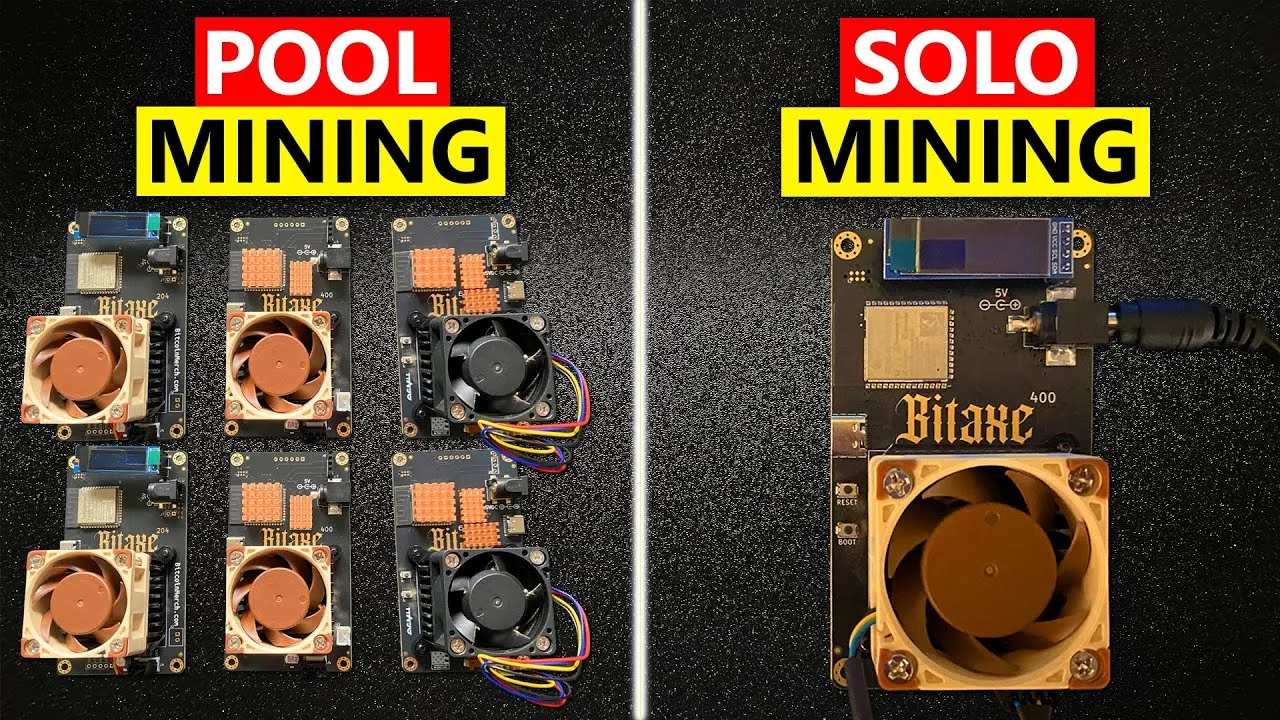
Because this choice affects both risk and reward so directly, it helps to compare the two approaches side by side before committing your hardware to either one.
| Factor | Solo Mining | Pool Mining |
|---|---|---|
| Payout Frequency | Rare but full block reward | Frequent, smaller shares |
| Income Variance | Very high | Low and predictable |
| Fees | None | Small pool fee |
| Hardware Needed | Large amount to be competitive | Any amount, pooled together |
| Best Suited For | Large-scale operations | Beginners and small miners |
As this comparison shows, pool mining is generally the more practical starting point for anyone new to dogecoin mining, since it removes much of the unpredictability that comes with going solo.
Choosing the Right Dogecoin Mining Pool
Selecting a reliable pool matters just as much as choosing the right hardware. Fee structure, payout frequency, minimum withdrawal thresholds, and server reliability can all meaningfully affect your actual returns. Established pools with a long track record are generally safer than newer, unproven services.
Many pools also support merged mining directly, automatically crediting participants with both Dogecoin and Litecoin rewards from the same hash power. This has become the standard expectation for anyone serious about maximizing returns.
Dogecoin Mining Profitability in Today’s Market
Profitability is the question most people actually care about, and the honest answer depends on several variables that shift constantly alongside market conditions.
Calculating Costs, Electricity, and Hardware
Any realistic profitability assessment needs to start with upfront hardware costs, followed by ongoing electricity expenses. Because Scrypt ASIC machines run continuously, electricity rates can make an enormous difference between a profitable operation and one that quietly loses money.
Miners in regions with cheap electricity hold a clear structural advantage. For this reason, large-scale dogecoin mining operations increasingly cluster around specific locations where power costs remain low.
Factors That Influence Mining Returns
Beyond electricity and hardware, the price of Dogecoin itself plays a major role, since rewards are paid in coins rather than a fixed dollar amount. Network difficulty also matters, since it adjusts automatically based on total hash power competing for blocks.
Because Dogecoin’s merged mining ties its difficulty to Litecoin’s network health, shifts in Litecoin mining can ripple into Dogecoin profitability too. Therefore, anyone evaluating dogecoin mining should track all of these variables together rather than focusing on price alone.
Cloud Mining and Alternative Ways to Earn Dogecoin
For those who want exposure to dogecoin mining without buying physical hardware, cloud mining services offer an alternative, though one with its own distinct risks.
Risks and Rewards of Cloud Mining Services
Cloud mining lets customers rent computing power from a third-party provider, who operates the physical machines on their behalf. This model appeals to anyone who wants to participate in dogecoin mining without dealing with maintenance, heat, or electricity logistics.
However, this convenience comes at a cost. Because the customer never controls the hardware directly, the entire arrangement depends on the provider’s honesty, and contract terms can sometimes favor the provider far more than the customer.
Staying Safe From Mining Scams
Unfortunately, the popularity of dogecoin mining has attracted plenty of fraudulent schemes promising unrealistic returns. Legitimate providers typically offer verifiable infrastructure details, clear fee disclosures, and realistic profitability estimates.
Before committing any funds, research a provider’s history thoroughly and look for independent reviews. If a service seems to sidestep the basic economics that govern dogecoin mining, treat that as a warning sign.
The Future of Dogecoin Mining
Looking ahead, several ongoing trends will likely shape how dogecoin mining continues to evolve, both technically and within its community.
Network Difficulty and Long-Term Sustainability
As merged mining with Litecoin continues to anchor Dogecoin’s security, network difficulty is likely to keep trending upward over time. This means dogecoin mining will probably keep consolidating around efficient, large-scale operations with access to cheap electricity. Even so, smaller participants can still join through pools rather than attempting solo efforts.
Community and Developer Support
Dogecoin’s famously enthusiastic community has always played an outsized role in keeping the coin relevant, and that energy extends into ongoing interest in dogecoin mining. Continued development work, along with periodic upgrades aimed at efficiency and security, suggests that mining will remain a meaningful part of the ecosystem for years to come.
Conclusion
Dogecoin mining has traveled a long way from its meme-inspired origins to become a genuinely established part of the broader cryptocurrency mining landscape. Thanks to its Scrypt-based infrastructure and its security-enhancing merged mining relationship with Litecoin, the network remains more accessible than many of its proof-of-work counterparts.
Still, anyone considering dogecoin mining today should approach it with a clear understanding of hardware costs, electricity expenses, and market forces, rather than assuming rewards will simply appear. With its dedicated community and stable technical foundation, dogecoin mining looks set to remain a relevant and active corner of the crypto world for years to come.
FAQs
Is dogecoin mining still profitable in 2026? Profitability depends heavily on electricity costs, hardware efficiency, and current network difficulty. Large-scale operations with cheap power can still generate reasonable returns, but smaller setups often struggle to break even once all expenses are counted.
What is the difference between dogecoin mining and Bitcoin mining? Dogecoin mining relies on the Scrypt algorithm rather than Bitcoin’s SHA-256, and it also benefits from merged mining with Litecoin, which Bitcoin does not have. In addition, Dogecoin’s block times are much faster, so rewards arrive more frequently.
Can I mine Dogecoin using a regular computer or graphics card? Technically yes, but it is no longer practical. The network’s current hash power, boosted by merged mining with Litecoin, means dedicated Scrypt ASIC hardware is now required for any meaningful reward.
What does merged mining with Litecoin actually mean for Dogecoin? It allows miners to work on both networks at once using the same computational effort, since both chains share the Scrypt algorithm. This strengthens Dogecoin’s security while letting miners earn rewards from both coins simultaneously.
Is cloud mining a safe way to participate in dogecoin mining? It can be convenient, but it requires trusting a third-party provider’s honesty and transparency. Always research a provider’s track record and fee structure before committing funds, since the space has attracted its share of scams.