

The world of blockchain technology has always struggled with one basic problem: nobody wants to memorize a forty-character wallet address just to send a friend some crypto. This is exactly the gap that the Solana Name Service was built to close. By turning long, random strings of letters and numbers into short, human-readable names ending in .sol, the Solana Name Service has quietly become one of the most useful pieces of infrastructure in the Solana ecosystem. It is not just a convenience tool anymore. It has grown into a full identity layer that touches payments, community building, and even decentralized websites.
So, whether you are a casual trader who wants a memorable wallet address, or a project founder who wants to issue branded subdomains to your community, understanding how this naming system works is quickly becoming essential knowledge for anyone active in Web3. In this article, we will walk through what the Solana Name Service actually is, how it evolved, why it matters, how you can register your own domain, and what to watch out for before you buy one.
What Is the Solana Name Service?
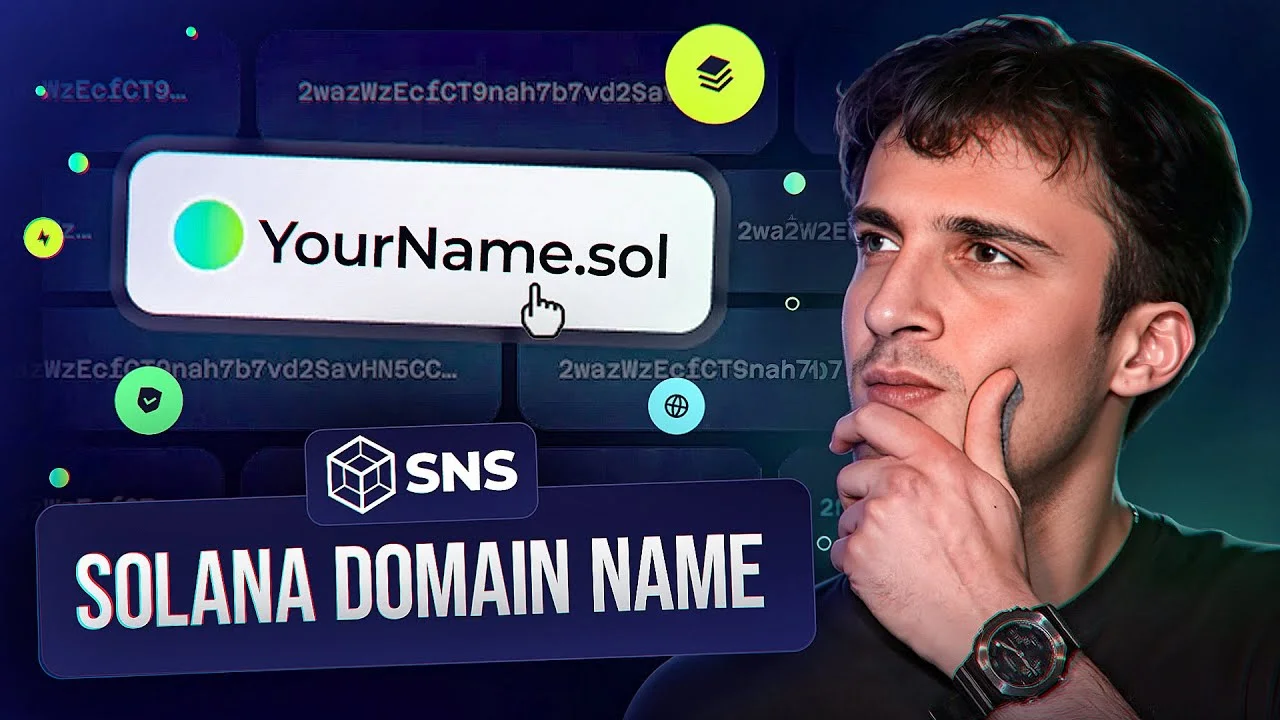
At its core, the Solana Name Service, often shortened to SNS, is a decentralized protocol that maps a human-readable name to on-chain data on the Solana blockchain. That on-chain data is usually a wallet address, but it can also be an image, a piece of text, or even a link to decentralized storage. Instead of sending funds to a public key like “VapRHFYaeTo2NY1m2o9QV8yY8E6yCqBECtYAgHUyQjb”, a user can simply send them to “david.sol”.
This single change removes one of the biggest sources of friction and error in everyday crypto usage, because a single mistyped character in a wallet address can lead to permanently lost funds. In short, the Solana Name Service was designed with this exact risk in mind, giving everyday users a safer and far more intuitive way to interact with the blockchain.
The Evolution From Bonfida to SNS
The naming system did not start out under its current identity. It was originally created by Bonfida, a team known for building analytics tools and decentralized finance infrastructure on Solana. Bonfida’s naming product grew steadily in popularity as more wallets, exchanges, and decentralized applications began supporting .sol domains for payments and login.
Then, in July 2024, the project underwent a significant rebrand, separating its identity-focused naming product from the broader Bonfida brand and relaunching it as the standalone Solana Name Service. This rebrand came with open-sourced smart contracts, a refreshed website, and a renewed focus on accessibility, transparency, and decentralized identity management.
As a result, the naming service was no longer viewed as a side project but as a core piece of Solana’s public infrastructure, important enough to deserve its own dedicated brand, governance token, and community.
How .sol Domains Work Technically
Understanding the mechanics helps explain why the system is trusted by so many wallets and applications. When someone registers a .sol domain through the Solana Name Service, the protocol creates a Program Derived Address, which is a special kind of account controlled entirely by a smart contract rather than a private key. This account stores the mapping between the readable name and the underlying data, such as a wallet address.
Because this record lives directly on the Solana blockchain, it inherits the same security guarantees as any other on-chain asset, meaning it cannot be altered by a central authority, and only the domain owner’s wallet can update or transfer it. Additionally, many .sol domains can be “wrapped” into non-fungible tokens, which means they can be held in a standard wallet, displayed in NFT galleries, and even traded on secondary marketplaces just like any other digital collectible.
Why the Solana Name Service Matters for Web3 Identity
The real significance of the Solana Name Service goes beyond simply replacing long addresses with short ones. It represents a shift toward a more usable, more human version of the blockchain experience, one where identity, reputation, and ownership can travel with a person across different applications rather than being locked inside a single platform.
Simplifying Crypto Transactions
For everyday users, the most immediate benefit is transactional simplicity. Sending assets to a .sol name instead of a raw public key drastically reduces the chance of costly mistakes. Many popular wallets, including Phantom, Solflare, and Backpack, natively resolve .sol domains, meaning a user can type a friend’s chosen name directly into the recipient field and the wallet will automatically find the correct address behind it.
This same resolution system also powers reverse lookups, allowing block explorers and applications to display a readable name instead of an intimidating string of characters whenever they detect a wallet that owns a registered domain.
Building a Unified On-Chain Identity
Beyond payments, the Solana Name Service functions as a foundation for a broader digital identity. A single .sol domain can be linked to a profile picture, social media handles, and other verifiable credentials, effectively becoming a portable identity card that works across wallets, marketplaces, and decentralized applications. This is particularly valuable in a fragmented Web3 landscape where users often juggle multiple wallets and platforms.
Instead of rebuilding a reputation from scratch on every new application, a user can carry their .sol identity with them, and any project that recognizes the naming standard will immediately understand who they are dealing with. This concept of a unified, self-owned identity is one of the main reasons blockchain naming systems, including Ethereum’s ENS and Solana’s own service, have attracted so much long-term interest from developers and investors alike.
How to Register a .sol Domain Through the Solana Name Service
Registering a domain is designed to be approachable even for someone who has never interacted with a blockchain application before. The process generally follows a short, predictable sequence of steps, and having a quick checklist on hand makes the first attempt much less intimidating.
- Install and fund a Solana-compatible wallet, such as Phantom, Solflare, or Backpack
- Visit the official Solana Name Service platform and connect that wallet
- Search for the desired name to confirm it is still available
- Approve the one-time registration transaction directly from the wallet
- Set the new .sol domain as the wallet’s primary display name once it confirms on-chain
Choosing a Wallet and Connecting
Before registering anything, a user needs a Solana-compatible wallet along with a small amount of SOL to cover network fees. After installing and funding the wallet, the next step is visiting the official Solana Name Service platform and connecting that wallet through the interface. This connection step authorizes the site to request transaction approvals, but it does not give the platform any custody over the user’s funds, since every registration transaction still has to be individually signed and approved from within the wallet itself.
Searching, Registering, and Owning Your Domain
Once connected, the user can search for a desired name to check whether it is still available. If the name is free, registering it typically involves paying a one-time fee, historically payable in SOL, USDC, or the ecosystem’s FIDA token, with no recurring renewal charges required afterward. After the transaction confirms on-chain, the domain is permanently tied to the connected wallet. And can immediately be used for receiving payments. If a preferred name has already been claimed. It is still possible to acquire it secondhand, and the table below compares the two acquisition paths side by side.
| Acquisition Method | Typical Cost | Availability | Best For |
|---|---|---|---|
| Fresh Registration | One-time fee in SOL, USDC, or FIDA | Only unclaimed names | Users open to any available name |
| Secondary Market Purchase | Market-driven resale price | Any listed name, including premium ones | Users who want a specific, already-claimed name |
The Business and Community Value of Solana Name Service Domains
While individual users mostly care about convenience, the Solana Name Service also offers meaningful tools for organizations, communities, and developers who want to build structured, branded experiences on top of Solana.
Subdomains for Teams and Projects
Owners of a primary .sol domain can create unlimited subdomains beneath it, effectively turning a single name into an entire branded namespace. A company might own “project.sol” and then issue subdomains like “support.project.sol” or “team.project.sol” to different departments or contributors.
This is achieved by setting up a subdomain registrar directly from the domain owner’s profile, after which delegated administrators can mint new subdomains on demand without requiring the original owner to approve every single one. Each subdomain can point to its own wallet, host its own content, or even issue further subdomains beneath it, giving communities a flexible and low-cost way to organize large groups of people under one recognizable brand.
Secondary Market and NFT Trading
Because many .sol domains exist as tradable NFTs. An active secondary market has formed around especially short, memorable, or brandable names. Domains resembling common words, popular usernames, or recognizable brand terms can command significant resale value, similar to how premium website domains are bought and sold on the traditional internet.
This has turned domain speculation into its own small niche within the broader Solana ecosystem, with dedicated marketplaces. And listing services making it easy to browse, bid on, and purchase existing names rather than waiting for a fresh registration to become available.
Solana Name Service vs Other Naming Systems
It is natural to compare the Solana Name Service to the Ethereum Name Service. Since both aim to solve the same underlying usability problem on their respective chains. Conceptually, the two systems are similar in that both convert a complex public key into a memorable name. And both allow that name to be used across a wide range of compatible wallets and applications. However, the differences become clear once cost, speed, and ecosystem support are compared directly, as shown below.
| Feature | Solana Name Service (SNS) | Ethereum Name Service (ENS) |
|---|---|---|
| Underlying Blockchain | Solana | Ethereum |
| Domain Extension | .sol | .eth |
| Typical Transaction Fees | Very low | Comparatively high, tied to gas prices |
| Confirmation Speed | Seconds | Can range from seconds to minutes depending on network load |
| Renewal Structure | One-time payment, no renewal fee | Annual renewal fee required |
| Subdomain Creation | Native, low-cost, delegated issuance | Supported, but generally costlier to manage |
This cost and speed advantage has helped the Solana Name Service attract a steady stream of new users. Who might otherwise have been priced out of blockchain-based naming altogether. While still offering many of the same identity and payment benefits. That made the original naming concept popular in the first place.
Risks and Considerations Before You Buy
As with any blockchain asset, a .sol domain is not entirely without risk. Because ownership is tied directly to a wallet’s private key, losing access to that wallet means losing access to the domain as well, with no customer support line able to recover it. Buyers purchasing names on secondary markets should also verify that a listing is genuine. And not a copy or lookalike domain designed to impersonate a well-known name.
Additionally, because value for premium domains is driven largely by speculation and community sentiment. The buyers treating a .sol domain purely as an investment should understand. That resale prices can fluctuate significantly and are not guaranteed to increase over time. Treating the purchase primarily as a functional identity and payment tool, with any resale value viewed as a secondary bonus, tends to be the more sustainable approach for most everyday users.
Conclusion
The Solana Name Service has evolved from a simple convenience feature into a foundational piece of identity infrastructure for the entire Solana ecosystem. By replacing intimidating wallet addresses with short, ownable .sol names. It has made everyday crypto transactions safer, more intuitive, and more human. From individual users who just want an easier way to receive payments, to entire communities building structured subdomain systems. The naming service offers practical value at every level of engagement.
As Web3 adoption continues to grow, tools like this one. That reduce friction and increase trust are likely to remain central to how people interact with decentralized networks. Making a basic understanding of the Solana Name Service genuinely useful knowledge for anyone spending time in the crypto space today.
Frequently Asked Questions
Is a .sol domain the same thing as an NFT?
Many .sol domains can be wrapped into non-fungible tokens. Which allows them to be stored, displayed, and traded like standard NFTs. Though the underlying registration itself is a program-controlled account on the Solana blockchain.
Do I have to pay every year to keep my .sol domain?
No, registrations through the Solana Name Service are typically a one-time payment. And there are no recurring renewal fees required to continue owning the domain afterward.
Can I create subdomains under my own .sol name?
Yes, domain owners can set up a subdomain registrar from their profile and issue unlimited subdomains. Which is commonly used by teams and communities to organize members under one shared brand.
What happens to my .sol domain if I lose my wallet?
Since ownership is tied directly to the wallet holding the domain. The losing access to that wallet’s private key or recovery phrase means losing access to the domain as well, with no central authority able to restore it.