

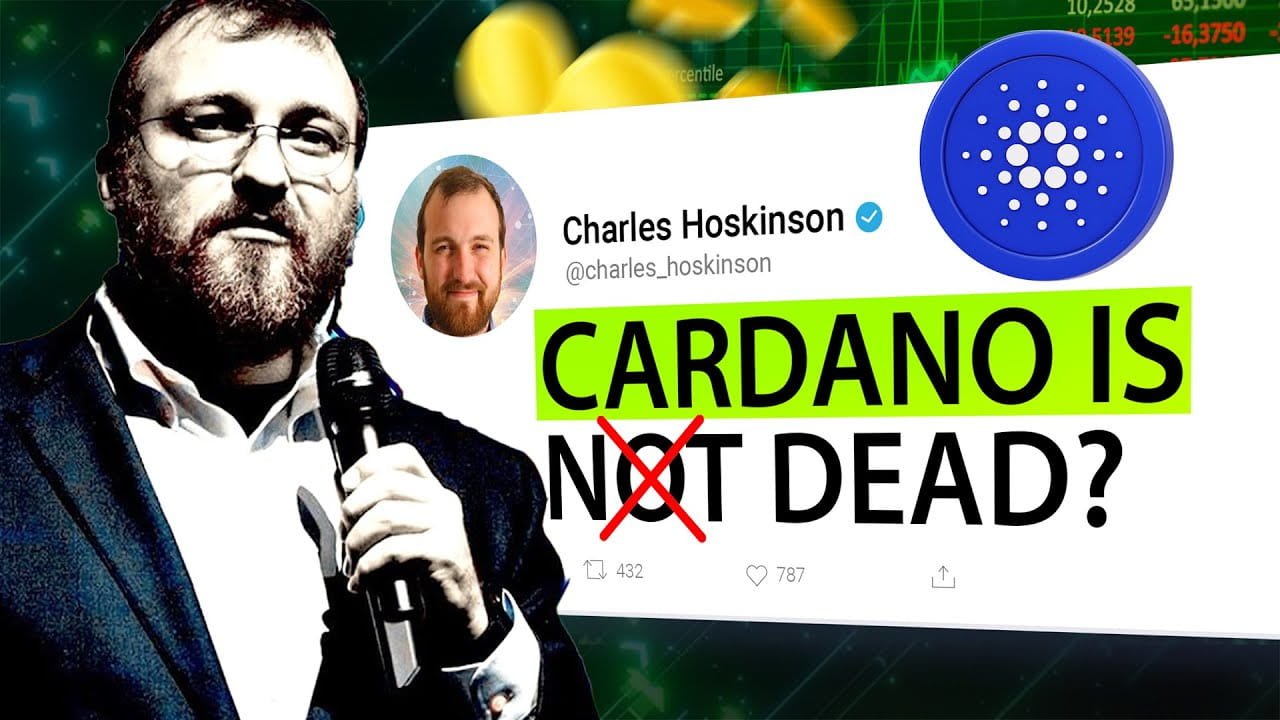
The question “Is Cardano dead?” has echoed through cryptocurrency forums, social media channels, and investment communities with increasing frequency throughout 2025 and into 2026. Once hailed as an Ethereum killer with revolutionary proof-of-stake technology and peer-reviewed research backing, Cardano (ADA) has faced mounting scrutiny as its adoption rates plateau and competing blockchain platforms continue to innovate at accelerating speeds.
The narrative surrounding Cardano’s future has grown increasingly complex. The project still maintains one of the largest market capitalizations in the cryptocurrency ecosystem, commanding billions of dollars in investor value. Its development continues, with the Cardano Foundation and IOHK (Input Output Global) consistently releasing updates and improvements. Yet, compared to the explosive growth of rival platforms like Solana, Polygon, and Base, Cardano’s trajectory appears stagnant to many observers.
Understanding whether Cardano is dead requires moving beyond simplistic answers and examining the multifaceted reality of the project’s current state. This involves analyzing Cardano’s development timeline, evaluating its technical advantages and limitations, assessing its competitive position within the blockchain industry, examining real-world adoption metrics, and considering the long-term vision driving the project forward. Only through comprehensive analysis can we determine whether Cardano represents a genuine technological advancement with unrealized potential or a project that has fundamentally failed to achieve its ambitious goals.
The Rise and Expectations That Created Disillusionment
Cardano’s Ambitious Beginning and Marketing Promises
Cardano launched in 2015 with extraordinary ambitions and an unusually prominent figurehead: Charles Hoskinson, the co-founder of Ethereum and a recognized authority in blockchain technology. The project positioned itself as a scientific alternative to earlier cryptocurrency platforms, emphasizing peer-reviewed research and rigorous development methodologies. The promise was clear: Cardano would deliver all the benefits of Ethereum while avoiding its technical limitations through superior engineering and design.
The marketing narrative surrounding Cardano proved exceptionally compelling. The project promised unprecedented scalability, enabling thousands of transactions per second while maintaining security. It proposed revolutionary governance mechanisms that would decentralize decision-making. It touted its proof-of-stake consensus model as superior to energy-intensive proof-of-work systems. Most importantly, Cardano projected timelines suggesting that these revolutionary features would arrive within specific, predictable windows.
Investors and cryptocurrency enthusiasts embraced this narrative enthusiastically. ADA token prices reflected optimism, with the cryptocurrency reaching all-time highs as it climbed toward the top five cryptocurrencies by market capitalization. The community grew passionate and engaged, with believers genuinely convinced that Cardano would revolutionize blockchain technology and eventually rival Bitcoin and Ethereum in significance.
Timeline Delays and Unmet Expectations
Reality, however, diverged substantially from expectations. Cardano’s development roadmap, which divided progress into distinct eras—Byron, Shelley, Goguen, Basho, and Voltaire—suffered persistent delays. Features promised for specific timeframes arrived late, sometimes years behind schedule. The smart contract functionality that would enable Cardano to compete with Ethereum’s decentralized application ecosystem took far longer to implement than originally anticipated.
These delays weren’t merely inconvenient—they fundamentally altered market perception. In the rapidly evolving cryptocurrency space, timing is critical. Every quarter that Cardano delayed its major upgrades allowed competitors to capture market share, developer attention, and adoption momentum. Ethereum, despite its own challenges, continued adding features and improvements. Solana burst onto the scene with unprecedented transaction speeds. Polygon captured adoption from Ethereum’s overflow of users. Meanwhile, Cardano remained in development purgatory, repeatedly disappointing the community with delayed launches.
The gap between Cardano’s promises and delivered results created what observers called a “credibility crisis.” Long-term believers grew frustrated with the glacial pace of development. Skeptics pointed to the missed timelines as evidence that the entire project was fundamentally flawed. The narrative shifted from “when **Cardano** becomes successful” to “if **Cardano** can ever deliver.”
Technical Evaluation: Assessing Cardano’s Actual Capabilities
The Strengths of Cardano’s Architecture
To determine whether Cardano is dead, we must objectively examine its technical merits independent of market sentiment. The Cardano blockchain does possess genuine technical advantages that distinguish it from competitors. Its peer-reviewed research methodology ensures that design decisions are grounded in academic scrutiny rather than speculation. The Ouroboros consensus mechanism, which powers Cardano’s proof-of-stake system, has undergone rigorous mathematical analysis, providing strong theoretical guarantees about security and performance.
Cardano’s formal verification approach represents an unusual commitment to mathematical proof and correctness. Unlike many blockchain platforms that rely on testing and auditing, Cardano pursues formal methods to mathematically prove that code operates as intended. This approach, borrowed from mission-critical aerospace and defense systems, theoretically reduces the likelihood of catastrophic bugs or exploitable vulnerabilities.
The Cardano network’s energy efficiency deserves recognition as well. By implementing proof-of-stake rather than energy-intensive proof-of-work, Cardano operates with a fraction of the environmental impact of Bitcoin or Ethereum (pre-Shanghai upgrade). For environmentally conscious investors and developers, this represents a genuine advantage and aligns with global sustainability concerns.
Additionally, Cardano’s governance model, still developing through the Voltaire era, attempts to solve a persistent blockchain industry problem: how to make decentralized decisions fairly and transparently. While imperfectly implemented, the aspiration to create a self-governing blockchain platform guided by its stakeholders addresses genuine concerns about centralization and decision-making authority.
Current Limitations and Competitive Disadvantages
Despite these technical strengths, Cardano faces substantial competitive disadvantages that partially explain its stagnating adoption. Most critically, transaction throughput—the number of transactions the network can process per second—remains limited compared to cutting-edge competitors. Solana operates at thousands of transactions per second, while Polygon achieves similar speeds through sidechain solutions. Cardano’s current capacity, while acceptable for many use cases, doesn’t match these competitors.
Cardano’s smart contract ecosystem remains underdeveloped. While the Plutus language for writing smart contracts on Cardano is technically sound, it hasn’t attracted the critical mass of developers necessary to create a vibrant decentralized application ecosystem. Ethereum, by contrast, enjoys network effects from having thousands of mature, battle-tested applications. New developers naturally gravitate toward platforms with established infrastructure, tools, and examples.
The developer experience on Cardano has historically been challenging. Documentation was sparse in the platform’s early phases. Development tools lagged behind competitors. The learning curve for Plutus was steep compared to more accessible smart contract languages like Solidity on Ethereum. While these issues have improved, the initial friction caused Cardano to lose momentum in attracting development talent.
Cardano’s governance, despite its theoretical elegance, has struggled with practical implementation. The process of making and ratifying changes moves slowly, sometimes frustratingly so for community members who see competitors moving quickly. The tension between decentralization and decisiveness has proven challenging, leading to periods of uncertainty and community disagreement.
Adoption Metrics: Measuring Real-World Traction
Quantifying Cardano’s Current Usage
One objective way to assess whether Cardano is dead involves examining actual adoption metrics. The number of decentralized applications deployed on Cardano, while growing, remains modest compared to competitors. Ethereum hosts thousands of active dApps. Polygon’s ecosystem includes hundreds of popular applications. Cardano’s ecosystem, by contrast, contains dozens of meaningful applications, with many characterized as nascent or experimental.
Transaction volumes tell a similar story. While Cardano processes meaningful transaction volume, it represents a small fraction of overall blockchain activity. Ethereum dominates transaction volume through its vast DeFi ecosystem, NFT markets, and staking applications. Solana, despite its checkered history with network stability, captures enormous transaction volume during bull markets. Cardano’s transaction volume remains comparatively modest.
Smart contract deployment represents another metric worth examining. The number of active smart contracts on Cardano, while growing, increases at a slower pace than on competing platforms. This suggests that developers are not rapidly choosing Cardano as their platform of choice for new projects. Some existing projects that launched on Cardano have migrated to other platforms, seeking better scalability or stronger developer communities.
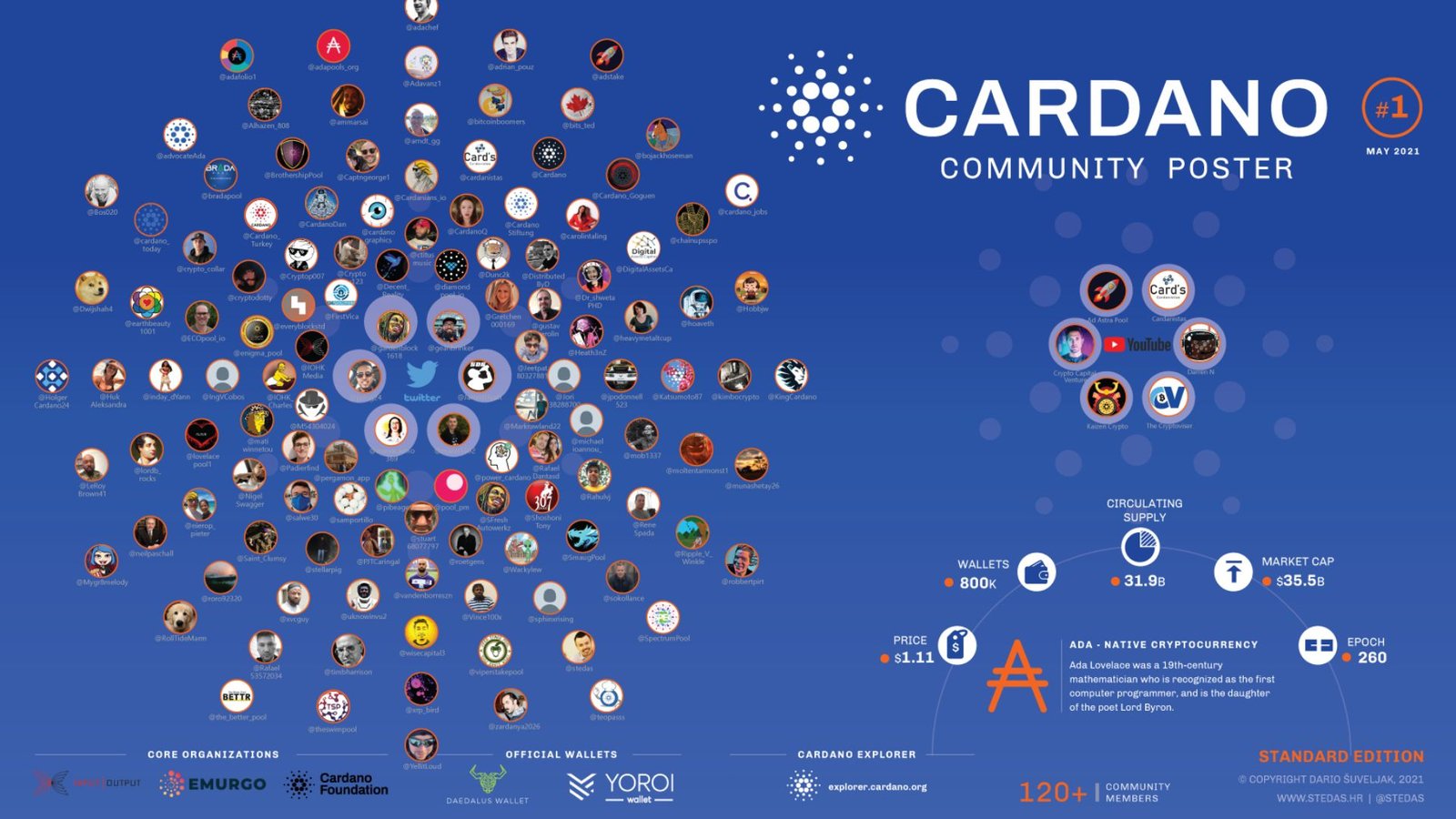
User engagement metrics also tell a cautionary tale. The number of active Cardano wallet addresses increased significantly during the 2021 bull market but has remained relatively flat since then. During bull markets, many altcoins see renewed interest, but Cardano has failed to capture the same speculative enthusiasm that drives newer platforms. This suggests that retail investor interest in ADA has waned considerably.
Enterprise Adoption and Real-World Use Cases
Cardano has pursued enterprise adoption and real-world use cases more aggressively than many blockchain projects. The Cardano Foundation has announced partnerships and exploration of applications in supply chain, identity management, and voting systems. In developing nations, particularly in Africa, there are initiatives exploring Cardano for land registry, educational credential systems, and financial inclusion.
These real-world applications represent genuine progress and demonstrate that Cardano has utility beyond speculation and DeFi. However, the scale remains limited. Most announced partnerships are pilots or explorations rather than full-scale deployments affecting millions of users. Cardano has not achieved breakthrough adoption in any major use case category comparable to Ethereum’s dominance in DeFi or Solana’s success in NFT trading.
The distinction is important: Cardano is not completely unused or worthless. The network continues operating, transactions continue processing, and real economic activity occurs. However, the adoption trajectory falls far short of the revolutionary impact that early promoters promised.
The Competition and Market Dynamics
How Other Platforms Left Cardano Behind
The blockchain industry has evolved at breathtaking speed since Cardano’s inception. New platforms emerged that improved on Cardano’s weaknesses without inheriting its caution. Solana, despite network reliability issues, achieved tremendous transaction throughput. Polygon offered Ethereum scaling without requiring developers to learn a new ecosystem. Avalanche, Fantom, and numerous others captured user attention through superior developer tooling or more aggressive promotion.
Ethereum itself addressed many of its original scaling limitations through layer-2 solutions like Arbitrum and Optimism, as well as eventual core protocol improvements. Rather than becoming obsolete, Ethereum evolved, maintained network effects, and strengthened its competitive position. Cardano, by contrast, faced a paradox: its careful, deliberate approach to development meant that by the time features arrived, competitors had already implemented similar or superior solutions.
The cryptocurrency market also became increasingly sophisticated. Early believers in Cardano who held through multiple market cycles eventually diversified or exited positions. New investor cohorts showed preference for platforms with demonstrated adoption and momentum rather than theoretical potential. ADA token prices, while not collapsing, failed to participate in the explosive appreciation seen by many competing tokens during bull markets.
Network Effects and Developer Migration
Blockchain platforms exhibit powerful network effects. Developers choose platforms where other developers are building. Users prefer platforms with vibrant ecosystems of applications. This creates a virtuous cycle for successful platforms and a vicious cycle for struggling ones. Cardano found itself in the latter situation: a lack of compelling applications discouraged developers, which meant fewer new applications, which discouraged users, which meant less demand for the platform.
Some developers who initially committed to Cardano have since migrated to other platforms, taking their expertise and projects with them. While new developers continue exploring Cardano, the net flow of development talent appears negative compared to platforms showing explosive growth. This represents a critical vulnerability for Cardano’s long-term prospects, as the developer community ultimately determines a blockchain platform’s evolution and competitiveness.
Development Activity and Future Roadmap
Continuing Development Efforts
Despite the pessimistic narrative surrounding Cardano, development activity continues. The Cardano Foundation, IOHK, and the Emurgo consortium continue releasing updates and improvements. Recent upgrades have focused on improving transaction throughput, enhancing smart contract capabilities, and refining governance mechanisms. The project has not been abandoned—it continues receiving development attention and investment.
The Vasil upgrade, implemented in 2022, introduced important improvements to Plutus smart contracts, reducing execution costs and improving efficiency. Subsequent upgrades continued iterating on the Cardano protocol, suggesting that the development effort remains committed to addressing the platform’s limitations. These improvements, while valuable, have occurred somewhat quietly compared to the dramatic announcements that characterized earlier Cardano eras.
The shift from IOHK (now rebranding as Intersect, indicating a transition toward community-driven development) represents an evolution in Cardano’s governance and project structure. This transition could prove significant if it successfully democratizes Cardano development and empowers the community. However, transitions like this carry execution risk and uncertainty.
The Ambitious Voltaire Vision
Cardano’s final roadmap era, Voltaire, focuses on establishing fully decentralized governance. If successfully implemented, Voltaire would enable ADA token holders to directly influence Cardano’s development and evolution through on-chain voting mechanisms. This represents an ambitious vision—a self-governing blockchain platform without centralized leadership or corporate control.
However, Voltaire’s execution has moved slowly, with governance mechanisms rolling out gradually rather than in a grand unveiling. The practical challenges of decentralized governance—attracting sufficient participation, preventing voter apathy, preventing special interests from capturing governance, making effective decisions—have proven more difficult than theoretical models suggest. Cardano’s Voltaire implementation, while progressing, demonstrates these challenges in real-time.
The Verdict: Is Cardano Dead or Merely Dormant?
Understanding the Nuance
Declaring Cardano dead or alive requires defining what “dead” means. If dead means completely non-functional, abandoned, or worthless, then Cardano clearly remains alive. The network operates reliably, transactions process consistently, and development continues. The ADA token maintains significant market capitalization, and genuine community support persists.
However, if dead means failing to achieve its original vision, disappointing early believers, or ceding technological leadership to competitors, then Cardano has indeed suffered a significant decline from its once-exalted position. The project that was supposed to become a superior alternative to Ethereum has instead become a secondary platform with modest adoption and unclear growth prospects.
Cardano’s situation might be best characterized as “dormant with uncertain prospects for awakening.” The project possesses genuine technical merit and a committed community, yet faces formidable competitive challenges and market headwinds. Whether Cardano can reignite adoption momentum depends on factors partially within and partially outside the project’s control.
Factors That Could Revitalize Cardano
Cardano’s future viability depends on several possible developments. A breakthrough in enterprise adoption—a major corporation or government choosing Cardano for a significant real-world application—could restore momentum. Successful implementation of Voltaire governance could attract developers impressed by Cardano’s commitment to decentralization. Substantial improvements in transaction throughput could make Cardano competitive with leading platforms on performance metrics.
Additionally, Cardano benefits from substantial financial resources, a committed founding team, and a technically competent developer community. These assets shouldn’t be discounted. Many unsuccessful blockchain projects have been abandoned entirely, but Cardano continues investing in improvement. This persistence, while not guaranteeing success, provides a pathway for recovery.
Realistic Assessment Going Forward
The most honest assessment is that Cardano occupies an uncomfortable middle position. It’s neither a revolutionary success nor a complete failure. It’s a technically competent blockchain platform with meaningful adoption and real utility, but one that has failed to capture the momentum necessary for explosive growth. The question “Is Cardano dead?” isn’t answered with a binary yes or no—it’s answered with “Cardano is struggling and facing an uncertain future, but remains viable.”
For long-term investors, this ambiguity creates genuine risk. Cardano could eventually achieve significant success if it executes effectively on its roadmap and captures adoption. Alternatively, it could remain perpetually second-tier, never achieving the breakthrough success its supporters envision. The cryptocurrency market has limited patience for projects showing indecision or slow progress, and Cardano has demonstrated both characteristics.
Conclusion
The question “Is Cardano dead?” cannot be answered with definitive finality because Cardano occupies a murky middle ground between success and failure. The Cardano blockchain continues functioning reliably, development proceeds methodically, and a community of believers persists. By these measures, Cardano remains very much alive.
However, by broader measures of ambition and achievement, Cardano has fundamentally underperformed relative to its initial promise and competitive positioning. What was supposed to be an Ethereum killer has instead become a secondary platform with modest adoption, limited DeFi activity, and uncertain growth prospects. The narrative surrounding Cardano has shifted from revolutionary potential to cautious skepticism.
Cardano’s future will be determined by whether the project can execute effectively on its remaining roadmap milestones, whether Voltaire governance successfully attracts community engagement, whether real-world adoption finally materializes, and whether the cryptocurrency market at large grants Cardano sufficient time and patience to prove its value. For now, Cardano remains suspended between these possibilities—not dead, but certainly not thriving in the manner once envisioned.