

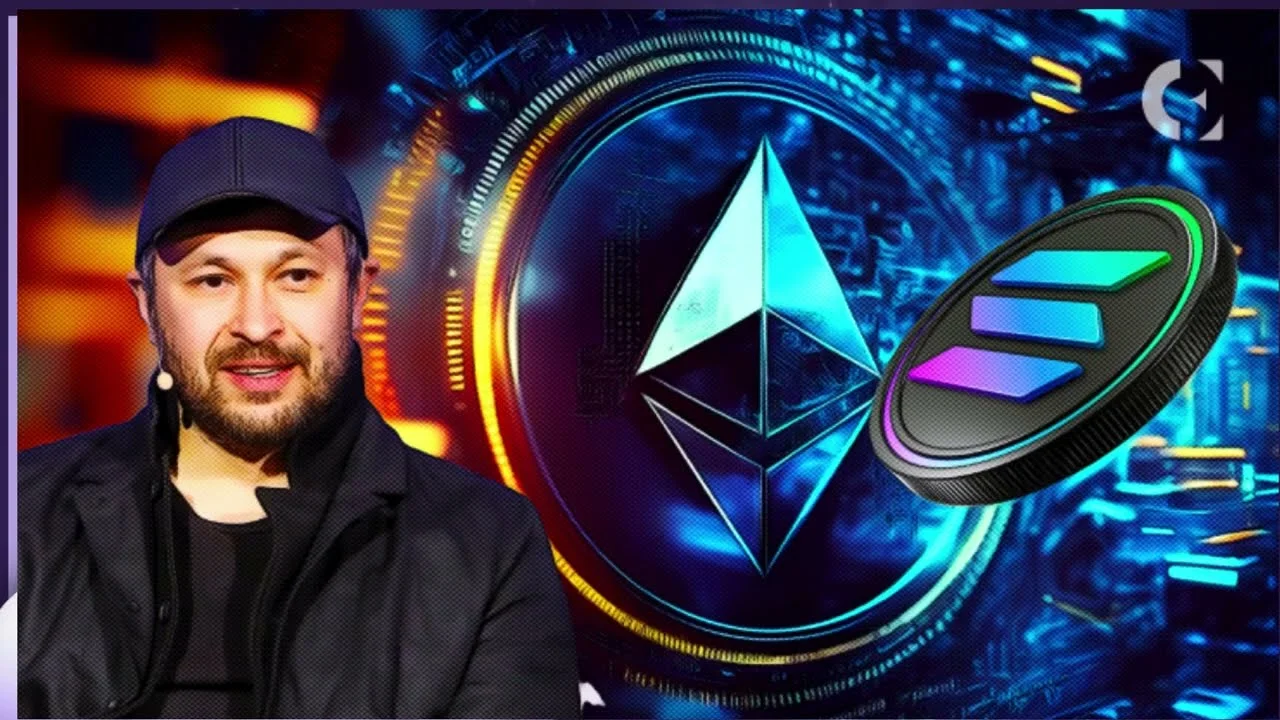
Who is Anatoly Yakovenko? He is the Ukrainian-born software engineer and entrepreneur who co-founded Solana, a high-performance blockchain platform now ranked among the most influential networks in crypto. Before he became a household name, Anatoly Yakovenko spent more than a decade mastering distributed systems and operating system design at some of the biggest names in mobile technology. That background turned out to be the exact foundation he needed to solve one of blockchain’s toughest problems: making a decentralized network fast enough for mainstream use without sacrificing security.
Understanding who Anatoly Yakovenko is means understanding a builder who values engineering rigor over hype, even while leading one of the most talked-about companies in Web3. This article walks through his early life, his career path, the breakthrough idea behind Solana, and the personal traits that continue to shape his leadership today. Along the way, you will also find quick comparison tables that place Anatoly Yakovenko and Solana side by side with other well-known founders and blockchains, so you can see exactly where he fits in the wider industry.
What makes the story of Anatoly Yakovenko compelling is the contrast between his understated personality and the scale of what he built. He rarely courts controversy for its own sake, and he tends to let the technology speak for itself rather than relying on bold promises. Yet Solana, the platform he created, has weathered brutal market cycles, painful network outages, and constant comparisons to Ethereum, all while growing into a blockchain capable of processing transactions at speeds that once seemed impossible for a decentralized system.
Quick Facts About Anatoly Yakovenko
Before diving into the full story, here is a quick snapshot of who Anatoly Yakovenko is and what he is known for.
- Full name: Anatoly Yakovenko, also known online as Toly
- Known for: Co-founding Solana and inventing Proof of History
- Role today: Co-founder and CEO of Solana Labs
- Background: Ukrainian-born, raised in the United States, studied computer science at the University of Illinois Urbana-Champaign
- Career before Solana: Roughly thirteen years at Qualcomm, followed by roles at Mesosphere and Dropbox
- Solana founded: 2018, alongside co-founder Raj Gokal
- Based in: San Francisco Bay Area
Who Is Anatoly Yakovenko? A Quick Introduction to the Man Behind Solana
Anatoly Yakovenko currently serves as the co-founder and chief executive of Solana Labs, the company responsible for building and maintaining the Solana blockchain. He is widely credited as the inventor of Proof of History, a mechanism that gives Solana its distinctive speed advantage over many competing networks.
Based in the San Francisco Bay Area, Anatoly Yakovenko built his reputation not through marketing but through a long career as a systems engineer. He specialized in squeezing maximum performance out of complex, resource-constrained environments. That engineering discipline is arguably the single biggest reason Solana looks and functions so differently from earlier blockchain platforms.
The Early Life and Background of Anatoly Yakovenko
Long before blockchain technology existed in any recognizable form, Anatoly Yakovenko was a curious child growing up in Ukraine, then part of the Soviet Union. His family later emigrated to the United States, where he was raised by first-generation immigrants who valued education and hard work above almost everything else.
Anatoly Yakovenko has spoken about how difficult it can be to explain his career to his parents, since the concept of a decentralized computer network is far removed from the world they knew growing up. Even so, that immigrant background instilled in him a strong work ethic and a willingness to tackle unfamiliar, technically demanding problems.
Growing Up Between Two Worlds
Moving from Soviet Ukraine to the United States as a child meant that Anatoly Yakovenko had to adapt quickly to a new language, culture, and education system. Rather than treating unfamiliar challenges as obstacles, he tends to view them as puzzles waiting to be decomposed into smaller, solvable pieces. That mindset shows up repeatedly throughout his career, from his early days in operating systems to his eventual pivot into blockchain architecture.
Studying Computer Science at the University of Illinois
Anatoly Yakovenko pursued his undergraduate studies at the University of Illinois Urbana-Champaign, a school known for producing strong engineering talent. While still a student, he co-founded a small voice-over-internet-protocol startup, an early sign of his entrepreneurial instincts long before Solana existed.
His formal training in computer science gave him a rigorous foundation in algorithms, systems design, and performance optimization. These subjects might have seemed purely academic at the time, but they later became directly relevant to building a blockchain capable of handling enormous transaction volume.
Anatoly Yakovenko’s Career Before Solana
Most people who ask who Anatoly Yakovenko is are surprised to learn that he spent the bulk of his professional life far away from cryptocurrency altogether. His career before Solana reads like a tour through some of the most demanding corners of enterprise software engineering.
Thirteen Years at Qualcomm
For roughly thirteen years, Anatoly Yakovenko worked at Qualcomm, where he focused on operating system development for mobile devices. During his time there, he contributed to technologies supporting virtual reality and augmented reality applications, work that demanded extreme efficiency since mobile hardware has limited processing power and battery life.
This long stretch at Qualcomm gave Anatoly Yakovenko deep, hands-on experience with distributed systems, networking protocols, and low-level performance tuning. It also exposed him to cellular communication standards, an experience that would later spark the core insight behind Solana’s architecture.
Distributed Systems Experience at Mesosphere and Dropbox
After leaving Qualcomm, Anatoly Yakovenko continued sharpening his skills at Mesosphere and later at Dropbox, both companies that rely heavily on distributed systems to manage massive amounts of data reliably. At Dropbox specifically, he worked on compression technology, a discipline focused on making data smaller and transmission faster without losing information.
Each of these roles reinforced the same underlying theme: building systems that remain fast, reliable, and efficient even as the amount of data or the number of users scales dramatically. That theme became the central design philosophy behind Solana.
The Idea That Changed Everything: Proof of History
The defining moment in the story of Anatoly Yakovenko arrived when he realized that a concept borrowed from cellular networking could solve one of blockchain’s most stubborn bottlenecks. Traditional blockchains struggle to agree quickly on the order of transactions across a distributed network of computers, and that struggle for consensus often slows everything down.
Borrowing a Concept from Cellular Networks
Early cellular protocols relied on a technique called time division multiple access, which allowed multiple devices to share the same communication channel by dividing access into precise time slots. Anatoly Yakovenko recognized that a similar idea, applied to blockchain, could allow computers in a decentralized network to agree on the order of events without needing to constantly communicate back and forth.
Turning Time Into a Trustless Clock
At its core, Proof of History works by creating a verifiable, cryptographic record that proves a certain amount of time has passed between two events, without requiring participants to trust a centralized timekeeper. By embedding time directly into the structure of the blockchain, Solana can process and order transactions dramatically faster than networks that rely purely on traditional consensus methods.
Founding Solana Labs With Raj Gokal
After developing the theoretical foundation for Proof of History and publishing an early whitepaper, Anatoly Yakovenko co-founded Solana Labs in 2018 alongside Raj Gokal, who brought valuable experience in product development and venture capital. While Anatoly Yakovenko concentrated on the technical architecture and long-term engineering vision, Gokal focused on business strategy, partnerships, and growing the surrounding community.
Launching During a Crypto Winter
Solana Labs began its work during the 2017 to 2018 crypto winter, a period when funding was scarce and enthusiasm across the broader cryptocurrency market had cooled considerably. Anatoly Yakovenko has described it as a forcing function that pushed the team to focus entirely on building and shipping working technology instead of chasing hype or excessive fundraising.
Building a High-Performance Blockchain
Under the leadership of Anatoly Yakovenko, Solana grew into a network capable of theoretically processing tens of thousands of transactions per second. This performance advantage made Solana particularly attractive for decentralized finance platforms, gaming projects, and consumer-facing applications that cannot tolerate slow confirmation times.
How Anatoly Yakovenko Compares to Other Blockchain Founders
To really understand where Anatoly Yakovenko fits in the crypto landscape, it helps to compare his background and approach with a few other well-known blockchain founders.
| Founder | Background Before Crypto | Key Innovation | Primary Project |
|---|---|---|---|
| Anatoly Yakovenko | Systems engineer at Qualcomm, Mesosphere, and Dropbox | Proof of History | Solana |
| Vitalik Buterin | Programmer and writer within early Bitcoin community | Smart contract-based blockchain | Ethereum |
| Charles Hoskinson | Mathematician, early Ethereum contributor | Peer-reviewed, research-driven blockchain design | Cardano |
| Changpeng Zhao | Software developer, exchange technology builder | High-speed centralized and decentralized exchange infrastructure | Binance |
As the table shows, Anatoly Yakovenko stands out for coming almost entirely from a traditional systems engineering background rather than from within the cryptocurrency industry itself. That outsider’s perspective is part of why Proof of History looks so different from consensus mechanisms designed by people who started their careers already immersed in blockchain theory.
What Sets Solana Apart Under Anatoly Yakovenko’s Leadership
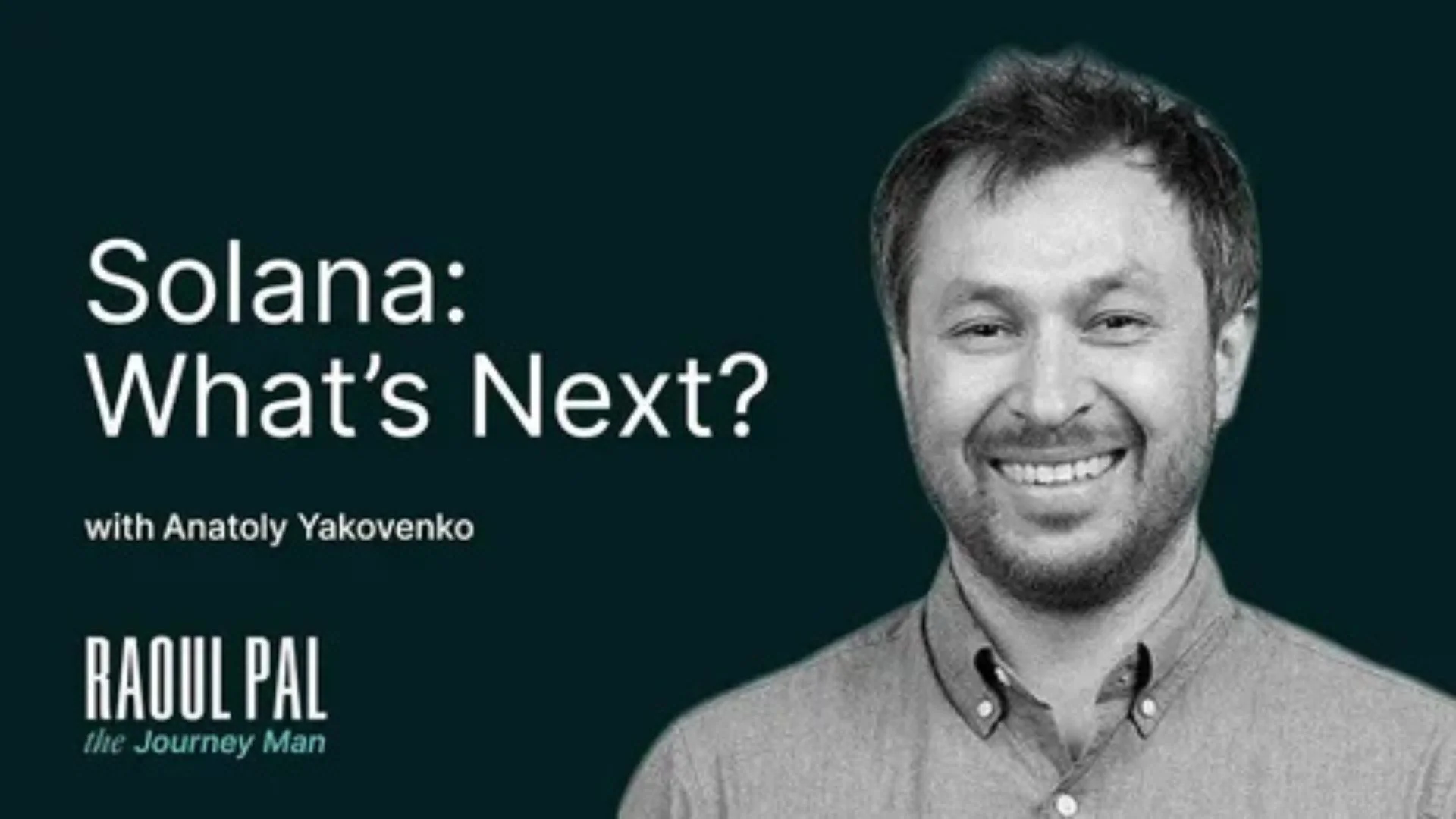
Many blockchain founders talk about scalability, but Anatoly Yakovenko approached the challenge with an engineer’s obsession for measurable performance rather than theoretical promises. Solana’s architecture separates several core functions that other blockchains often bundle together, allowing the network to process transactions in parallel rather than strictly one after another.
The table below compares Solana with two of the most widely used blockchains, Bitcoin and Ethereum, across a few key metrics that matter most to everyday users and developers.
| Feature | Solana | Ethereum | Bitcoin |
|---|---|---|---|
| Founder(s) | Anatoly Yakovenko and Raj Gokal | Vitalik Buterin and others | Satoshi Nakamoto |
| Year founded | 2018 | 2015 | 2009 |
| Consensus mechanism | Proof of History combined with Proof of Stake | Proof of Stake | Proof of Work |
| Theoretical transaction speed | Tens of thousands of transactions per second | Roughly 15 to 30 transactions per second on the base layer | About 7 transactions per second |
| Typical transaction cost | Fractions of a cent | Variable, often several dollars during congestion | Variable, often several dollars during congestion |
As a result, Solana occupies a distinct position within the so-called blockchain trilemma, which weighs scalability, security, and decentralization against one another. Anatoly Yakovenko has consistently prioritized composability alongside raw throughput, rather than treating the three goals as mutually exclusive.
Overcoming Setbacks: Anatoly Yakovenko’s Resilience Through Network Outages
No honest account of Anatoly Yakovenko’s career would be complete without acknowledging the genuine setbacks Solana has faced along the way. The network has experienced several high-profile outages over the years, moments that Anatoly Yakovenko himself has openly described as near-death brushes for the project.
Rather than downplaying these incidents, he has generally addressed them directly in public forums, explaining the technical causes and the engineering fixes implemented afterward. This willingness to confront failure publicly has helped Anatoly Yakovenko maintain credibility with a developer community that values transparency over polished public relations.
Anatoly Yakovenko’s Personal Life and Interests
Away from the demands of running a major blockchain company, Anatoly Yakovenko maintains a relatively private personal life compared to many other prominent figures in the cryptocurrency industry. He is married, and those close to him describe a household that balances the intensity of building a fast-growing technology company with ordinary family life.
Interestingly, Anatoly Yakovenko has also been recognized as a highly skilled underwater hockey player, an unusual hobby that hints at a competitive streak extending well beyond software engineering. He speaks Russian natively in addition to English, a reflection of his Ukrainian upbringing.
Anatoly Yakovenko’s Net Worth and Industry Influence
Estimating the exact net worth of Anatoly Yakovenko is genuinely difficult, since his wealth is closely tied to his holdings in Solana Labs and the fluctuating market price of the SOL token. Various industry estimates place his net worth anywhere from the tens of millions of dollars up to several hundred million dollars, depending heavily on market conditions.
Regardless of the precise figure, there is little debate about his broader influence within the cryptocurrency industry. Anatoly Yakovenko is regularly invited to speak on podcasts and industry panels, where he discusses everything from technical roadmaps to the philosophical tradeoffs involved in blockchain design.
The Future Vision of Anatoly Yakovenko and Solana
Looking ahead, Anatoly Yakovenko continues to push Solana toward broader adoption, with particular emphasis on consumer applications, decentralized finance, and improved infrastructure for developers. He has repeatedly stated that long-term success depends on continually improving reliability and developer experience rather than resting on Solana’s existing speed advantage.
Given his track record of returning to hard engineering problems after setbacks, most observers expect Anatoly Yakovenko to remain deeply involved in Solana’s technical direction for years to come.
Conclusion
The story of Anatoly Yakovenko is fundamentally a story about engineering discipline meeting genuine ambition. From his childhood in Ukraine and his formal education at the University of Illinois, through more than a decade spent mastering distributed systems at Qualcomm, Mesosphere, and Dropbox, every stage of his career contributed something essential to the blockchain he eventually built.
Proof of History, the breakthrough concept that anchors Solana’s performance, emerged from years of technical experience combined with a willingness to borrow ideas from unrelated fields. Anatoly Yakovenko has faced real setbacks along the way, including painful network outages, yet he has consistently responded with transparency and renewed engineering focus. As Solana continues to evolve, Anatoly Yakovenko remains one of the clearest examples in the industry of how deep technical expertise can eventually reshape an entire sector.
FAQs
Who is Anatoly Yakovenko?
Anatoly Yakovenko is a Ukrainian-born software engineer and entrepreneur who co-founded the Solana blockchain platform. He currently serves as the chief executive of Solana Labs, and he is widely credited as the inventor of Proof of History, the mechanism that gives Solana its distinctive transaction speed.
What did Anatoly Yakovenko do before founding Solana?
Before founding Solana, Anatoly Yakovenko spent roughly thirteen years at Qualcomm working on operating systems for mobile devices, including technology related to virtual and augmented reality. He later worked at Mesosphere and Dropbox, gaining additional experience with distributed systems and data compression.
What is Proof of History and why did Anatoly Yakovenko create it?
Proof of History is a method for cryptographically proving that time has passed between two events, which allows a decentralized network to agree on transaction order without constant communication between participants. Anatoly Yakovenko developed the concept after drawing inspiration from time-based cellular communication protocols he encountered during his career at Qualcomm.
Why did Anatoly Yakovenko launch Solana during a crypto winter?
Anatoly Yakovenko and his co-founder Raj Gokal began building Solana during the 2017 to 2018 crypto winter, a period of reduced funding and lower market enthusiasm. Rather than viewing this as a disadvantage, Anatoly Yakovenko has said the difficult conditions forced the team to focus purely on building working technology instead of chasing hype.
How has Anatoly Yakovenko responded to Solana’s network outages?
Anatoly Yakovenko has generally addressed Solana’s network outages directly and publicly, explaining the technical causes behind each incident and the engineering changes implemented afterward. This transparent approach has helped him maintain credibility with developers and users who value honest communication over polished public relations.