



Introduction: Why Crypto Security Needs a New Approach
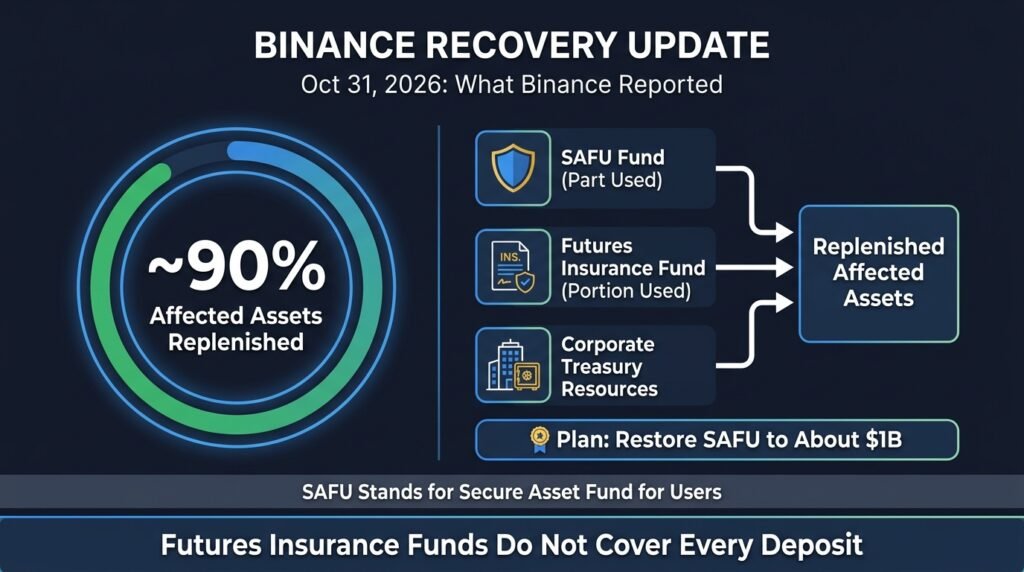
Cryptocurrency has changed how people view crypto security after the Binance hack, but digital assets also create new security challenges. Crypto exchanges handle millions of transactions, manage enormous digital reserves, and connect users to blockchain networks worldwide. These responsibilities make security a fundamental part of the industry rather than an optional feature. The recent Binance security incident has renewed important questions about exchange protection, asset transparency, emergency funds, and custody practices. According to Binance’s October 31, 2026, update, the company had replenished approximately 90% of the affected assets and committed company resources to cover the losses. The incident highlights an important lesson: even a major exchange needs multiple layers of protection. Investors now need stronger safeguards, clearer financial reporting, and better control over their assets. The future of crypto security will depend on how effectively platforms combine transparent reserves, reliable insurance arrangements, and secure custody systems.
Understanding the Binance Hack and Its Security Lessons
The Binance incident demonstrates how attackers can exploit weaknesses across connected systems, even when a company invests heavily in security. Binance’s initial investigation pointed to a compromised employee laptop that may have allowed an attacker to access a service container and submit unauthorized withdrawal transactions. The company reported no evidence of a leaked wallet private key in its initial findings. However, investigators still need to distinguish confirmed facts from preliminary conclusions as they examine an incident. The attack also showed why exchanges must protect employee devices, internal applications, withdrawal permissions, and administrative systems. A strong security strategy cannot rely on one firewall or one authentication method. Exchanges must examine every point where people, software, and financial assets interact. They should also maintain incident response plans that help security teams detect suspicious activity, restrict unauthorized access, trace stolen assets, and communicate clearly with customers.
What the Incident Reveals About Exchange Vulnerabilities
Crypto exchanges operate complex digital environments that connect trading engines, databases, wallet infrastructure, employee accounts, and third-party services. An attacker may target any of these components to find a path toward valuable assets. Compromising an employee device can create serious risks when an organization grants excessive privileges or fails to isolate critical systems. Exchanges should apply the principle of least privilege, which gives each employee and application only the access required to perform its duties. They should also separate development environments from production systems and require independent approval for sensitive withdrawals. Continuous monitoring can help security teams identify unusual login locations, unexpected permission changes, and suspicious transaction patterns. Regular penetration testing and independent security assessments can expose weaknesses before criminals exploit them. These measures cannot eliminate every threat, but they can reduce the likelihood that one compromised device will trigger a much larger incident.
Proof of Reserves: Making Crypto Exchanges More Transparent
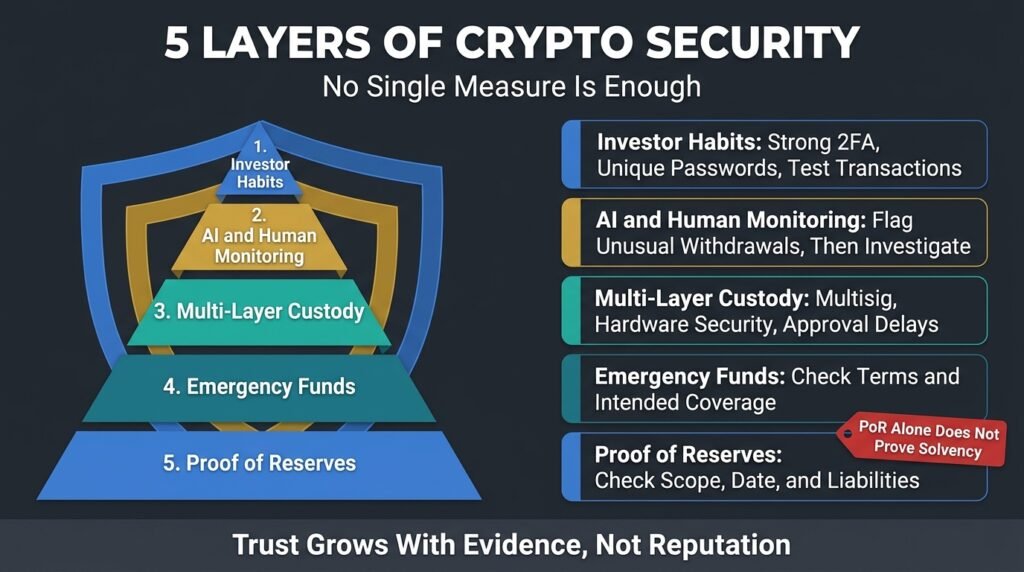
Proof of Reserves (PoR) gives customers a way to examine whether a crypto exchange holds assets that support its reported customer balances. Instead of asking users to trust a platform’s public statements alone, PoR systems can provide cryptographic evidence that supports reserve verification. Many systems use a Merkle tree or related cryptographic structure to represent customer balances while helping users check their inclusion in the reported liabilities. Some platforms also use zero-knowledge proofs to improve verification without revealing unnecessary personal information. Binance explains its approach through its official Proof of Reserves page. This type of transparency can help customers make better-informed decisions about custody. However, PoR does not automatically prove that an exchange has no hidden debts, undisclosed liabilities, or weaknesses in its internal controls. Customers should examine the scope, date, methodology, and independent assurance behind every published report rather than treating one snapshot as a complete guarantee of financial health.
Why Proof of Reserves Matters After a Major Hack
A security breach can quickly damage customer confidence, especially when users cannot determine whether an exchange still holds sufficient assets. Regular reserve disclosures can help users compare reported holdings with the assets that a platform owes its customers. Exchanges should publish understandable reports, explain their verification methods, and update their evidence after significant security events. Independent auditors can add value by examining the underlying records and checking whether the published information accurately represents the agreed scope. Customers should also look for clear explanations of which assets the exchange includes and which liabilities the report excludes. A reserve ratio above 100% may offer useful information, but the figure means little without a reliable method and complete liability data. Exchanges that combine cryptographic verification with independent financial reviews can build stronger accountability. Ultimately, Proof of Reserves should serve as one component of a broader transparency program, not as a marketing slogan or a substitute for comprehensive risk management.
Insurance Funds: A Financial Safety Net for Crypto Users
Insurance and emergency funds can help exchanges manage financial losses after a security breach, liquidation event, or other unexpected disruption. Binance operates the Secure Asset Fund for Users, commonly known as SAFU, to support users during extreme platform incidents. In its October 31 update, Binance said it had used part of SAFU, a portion of its Futures insurance fund, and corporate treasury resources to replenish affected assets. The company also said it intended to restore SAFU to approximately $1 billion. These measures illustrate how emergency reserves can support a recovery plan when an exchange faces significant losses. However, users should understand that different funds serve different purposes. An exchange’s futures insurance fund generally helps manage losses associated with leveraged trading and liquidation events; it does not automatically provide universal insurance for every customer deposit. Users should review the fund’s terms, balance, legal structure, and intended coverage before assuming that a particular loss qualifies for compensation.
The Difference Between Emergency Funds and Traditional Insurance
Traditional insurance policies usually define covered events, exclusions, limits, and claims procedures in a contract. Crypto exchange emergency funds may operate under different arrangements and may depend on a platform’s internal policies, available resources, and applicable regulations. Customers should not assume that a fund guarantees repayment in every scenario. A fund could face pressure if an incident creates losses beyond its available resources or affects several systems at once. Exchanges should publish clear information about how they fund these reserves, when they can use them, and how they plan to replenish them after a payout. Independent verification of reserve balances can strengthen confidence in those disclosures. Platforms should also explain whether a fund protects spot trading balances, derivatives accounts, custody services, or only specific types of incidents. Clear rules help customers understand the actual protection they receive. Strong emergency funds matter, but prevention, transparency, and responsible financial management remain equally important parts of a dependable security strategy.
Stronger Custody: Protecting Digital Assets at Their Source
Custody describes how an individual or organization controls the private keys that authorize cryptocurrency transactions. Anyone who controls the necessary private keys can generally authorize transfers, which makes key management one of the most important parts of crypto security. Exchanges commonly combine hot wallets, which connect to online systems for operational convenience, with cold wallets, which keep keys away from continuously connected environments. Hot wallets support faster withdrawals, while cold storage can reduce exposure to certain online attacks. A secure custody program should distribute assets according to operational needs and risk limits rather than placing every asset in one location. Platforms can also use multisignature wallets, hardware security modules, geographically separated key shares, and strict transaction approval procedures. These safeguards make unauthorized transfers more difficult and help limit the impact of a single compromised component. Exchanges should regularly test recovery procedures and review key access because even advanced technology cannot protect assets if staff ignore sound operational practices.
How Multi-Layer Custody Can Reduce Security Risks
A stronger custody architecture combines several independent controls instead of trusting a single protective measure. For example, an exchange can require multiple authorized parties to approve large withdrawals and apply additional verification when transactions exceed predefined risk thresholds. It can store critical signing keys in secure hardware and separate approval systems from the applications that request transfers. Automated monitoring can flag unusual withdrawal volumes, new destination addresses, and sudden changes in transaction behavior. Time delays for high-risk transfers can provide security teams with an opportunity to investigate suspicious requests before assets leave the platform. Exchanges should also maintain offline recovery materials and test their disaster recovery procedures under realistic conditions. Independent audits can evaluate whether employees follow established controls and whether emergency access creates hidden vulnerabilities. Customers should check how a platform describes its custody arrangements, although public explanations may not reveal every operational detail for legitimate security reasons. Strong custody reduces risk, but it never removes the need for continuous monitoring and accountability.
The Role of Artificial Intelligence in Future Crypto Security
Artificial intelligence can help security teams identify suspicious behavior across enormous volumes of transactions and system logs. Machine learning models can analyze normal activity patterns and flag unusual withdrawals, account takeovers, automated attacks, and potentially fraudulent transfers. Security teams can combine these signals with blockchain analytics to investigate relationships between wallet addresses and track the movement of stolen funds. AI can also help analysts prioritize alerts, summarize incident evidence, and detect suspicious changes in access patterns. However, security teams must not treat an AI alert as proof of criminal activity. Poorly designed models can generate false positives, miss unfamiliar attack methods, or reproduce biases in their training data. Attackers can also use AI to create convincing phishing messages, impersonate employees, and automate reconnaissance. Exchanges should therefore combine automated detection with human investigation, access controls, and tested incident response procedures. The strongest systems will use AI as a supporting layer within a carefully designed security framework rather than as a replacement for experienced security professionals.
What Crypto Exchanges Must Do to Rebuild Trust
Crypto exchanges need to demonstrate security through measurable practices rather than broad promises. They should publish timely incident updates, explain the scope of confirmed losses, and distinguish verified findings from ongoing investigations. Platforms should commission independent assessments of their security controls and provide understandable information about reserve verification. They should also establish clear withdrawal safeguards, maintain well-funded emergency resources, and explain the limitations of any protection program. Regular security exercises can prepare employees to respond quickly when attackers compromise accounts or internal systems. Exchanges should test backup recovery, review third-party access, and limit the privileges of service accounts. Responsible platforms should also maintain effective customer support so users can report suspicious activity and receive accurate information during an incident. For readers who want to explore more cryptocurrency developments and related educational resources, Blockyr.com provides a relevant starting point. Trust grows when an exchange consistently demonstrates accountability, protects customer assets, and communicates openly about both its strengths and its limitations.
How Individual Investors Can Improve Their Crypto Security
Investors also have an important role in protecting their cryptocurrency holdings. First, they should enable strong two-factor authentication, preferably with a security key or authenticator application rather than relying only on SMS codes. They should use unique passwords, secure their email accounts, and avoid clicking suspicious links that imitate exchange websites. Hardware wallets can provide stronger control over long-term holdings when users understand how to protect and recover their seed phrases. Investors should never share recovery phrases or private keys with support agents, online contacts, or websites that promise account verification. They should verify withdrawal addresses carefully and consider a small test transaction before transferring a large amount. Keeping only the funds needed for active trading on an exchange can reduce exposure to platform-specific risks. Users should also review withdrawal settings, login notifications, and account activity regularly. Finally, they should research an exchange’s custody model, reserve reports, regulatory status, and incident history before depositing substantial funds. No security method guarantees complete protection, but consistent habits can significantly reduce avoidable risks.
The Future of Crypto Security: Transparency and Accountability
The future of crypto security will depend on cooperation between exchanges, auditors, blockchain analytics firms, regulators, and individual users. Proof of Reserves can improve visibility into customer asset backing, while independent audits can examine broader financial and operational questions. Emergency funds can help platforms absorb unexpected losses, and stronger custody can make unauthorized transfers more difficult. At the same time, exchanges must strengthen employee security, reduce excessive permissions, monitor transactions continuously, and prepare for sophisticated attacks. Regulators may also demand clearer disclosures, stronger custody standards, and better safeguards for customer assets, depending on the jurisdiction. These developments could help the industry build more consistent expectations for responsible operations. However, security standards must evolve alongside new technologies and emerging attack methods. Crypto platforms should treat every incident as an opportunity to examine weaknesses and improve their controls. Long-term trust will come from evidence, independent verification, and reliable protection rather than reputation alone.
Frequently Asked Questions (FAQs)
1. What is Proof of Reserves in cryptocurrency?
Proof of Reserves is a method that helps users verify whether a cryptocurrency platform holds assets that support reported customer balances. Cryptographic techniques can help users check their inclusion in a reserve report. However, users should also examine liabilities, reporting dates, and independent assurance because PoR alone does not establish complete financial solvency.
2. Does Proof of Reserves guarantee that an exchange is safe?
No. Proof of Reserves can provide useful evidence about asset holdings, but it does not guarantee protection against hacking, fraud, operational failures, or undisclosed liabilities. Users should also evaluate custody practices, withdrawal controls, independent audits, and the exchange’s financial disclosures.
3. What is Binance SAFU?
SAFU stands for Secure Asset Fund for Users. Binance established this emergency reserve to help protect users during extreme incidents. The fund can support recovery efforts, but users should consult Binance’s official announcements for current balances, applicable arrangements, and the precise scope of protection.
4. How do crypto insurance funds protect investors?
Crypto insurance or emergency funds can help cover certain losses, depending on the fund’s purpose and rules. Some funds primarily support derivatives trading and liquidation management rather than general customer compensation. Users should read the relevant terms before assuming that a fund covers a particular security breach or account loss.
5. Is cold storage safer than a hot wallet?
Cold storage generally reduces exposure to online attacks because it keeps private keys away from continuously connected systems. Hot wallets offer faster access for transactions but require strong online safeguards. Both approaches need secure key management, access restrictions, recovery planning, and regular monitoring.
6. What should users do after an exchange reports a hack?
Users should follow verified exchange announcements, review their account activity, and avoid links from unsolicited messages. They should enable strong authentication, change compromised passwords, and contact official support if they notice suspicious activity. They should also understand any withdrawal restrictions and avoid sharing private keys or recovery phrases with anyone.
7. Can artificial intelligence prevent every crypto hack?
No. AI can help identify suspicious patterns and prioritize security alerts, but attackers continually develop new methods. Exchanges must combine AI-based monitoring with human investigations, secure custody, strict access controls, independent testing, and effective incident response plans.
Final Thoughts
The Binance hack reinforces a central lesson for the cryptocurrency industry: no exchange should depend on reputation or a single security measure to protect customer assets. Proof of Reserves can improve transparency, emergency funds can support financial recovery, and stronger custody systems can reduce the risk of unauthorized transfers. However, these safeguards work best when exchanges combine them with independent audits, employee security, continuous monitoring, and clear communication. Investors must also protect their accounts, verify platforms carefully, and understand the limits of exchange-based protection. The industry can build greater confidence by treating security as an ongoing responsibility rather than a one-time achievement. In the years ahead, platforms that demonstrate accountability and provide verifiable evidence of their practices will have a stronger foundation for earning customer trust. Ultimately, the future of crypto security depends on a shared commitment to transparency, resilience, and responsible asset management.