

The hardware wallet boom has a new trigger, and it comes from the world’s biggest exchange. In late October 2026, attackers drained about $6.3 billion from Binance in roughly twenty minutes. Analysts called it the largest known theft. Binance then promised to cover every loss from its own funds, and it restored withdrawals within days. That fast recovery calmed many users, but it also raised a sharp question. If the largest exchange can lose this much money, should anyone keep their coins there? This blog explains how the hack happened, how BNB held its ground, and why more holders now look at self-custody. It also shows how to balance convenience and safety. Read on to see why this debate matters for every crypto holder.
How the $6.3 Billion Binance Hack Unfolded
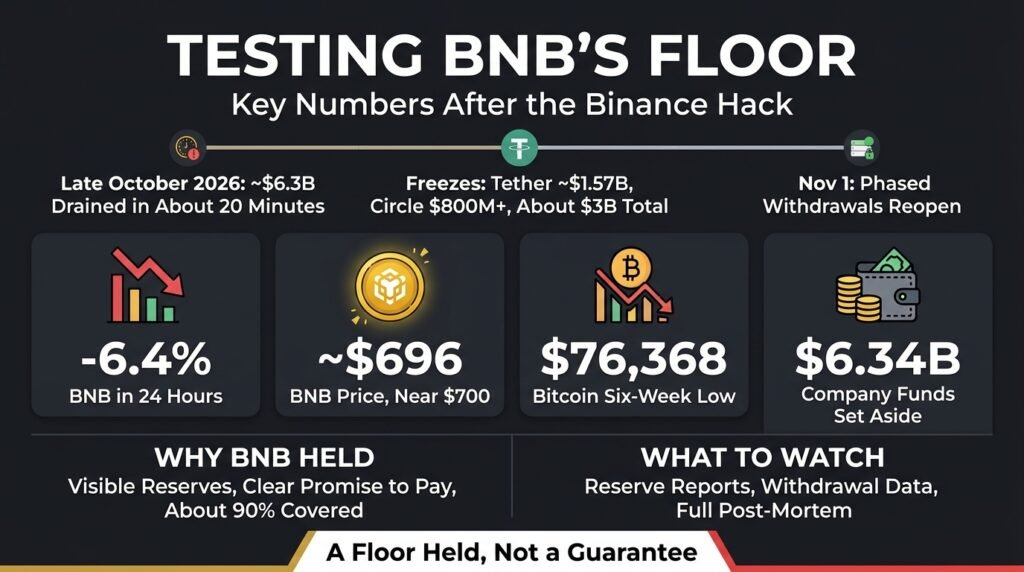
The attack began late on a Thursday and moved at extraordinary speed. According to Reuters reporting, the attackers emptied most of the funds in about twenty minutes. Analysts at TRM Labs and Chainalysis noticed strong similarities to earlier attacks that the United States linked to North Korea. North Korea denies those claims. Binance reacted quickly and froze its withdrawals. The company also told users that customer funds stayed safe. Meanwhile, stablecoin issuers moved fast. Tether froze roughly $1.57 billion in linked assets, and Circle froze more than $800 million. Together, these freezes locked down about $3 billion. The speed of those freezes limited the damage, but the remaining funds moved out of reach. This incident gave the market a painful reminder about concentrated custody risk.
Hot Wallet Weakness Behind the Breach
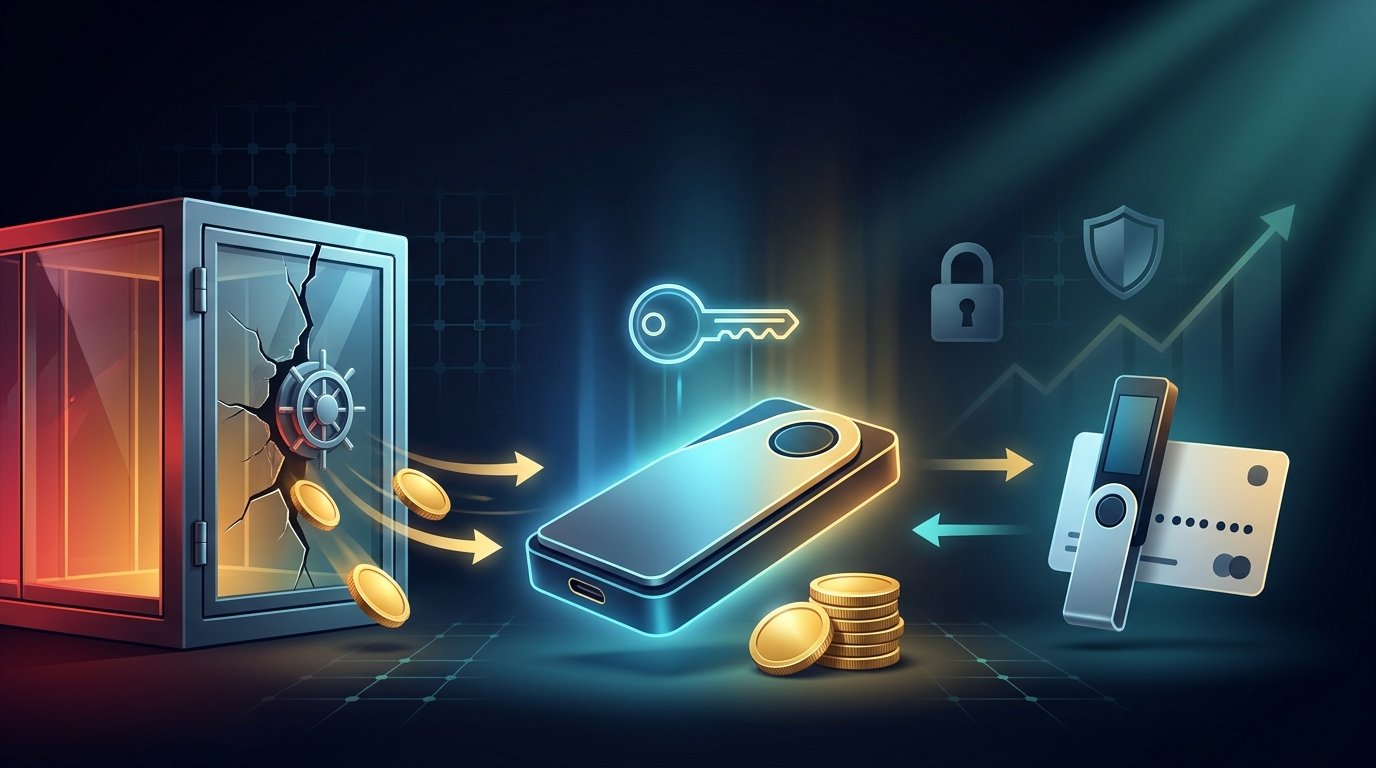
Binance co-CEO Richard Teng described the incident as a complex attack that involved more than one person. The attackers compromised a laptop and used malicious software that erased its own tracks. They then manipulated a system that approves transactions. As a result, they pulled money from an internet-connected hot wallet without passing the normal approval controls. This detail matters because hot wallets stay online by design. Exchanges need them to process fast withdrawals for millions of customers. However, that constant connection also gives hackers a target. A hardware wallet works differently. It keeps private keys offline, so a remote attacker cannot reach them through a compromised laptop alone. This difference sits at the heart of the hardware wallet boom. Users now ask why their savings sit in a system that depends on one approval layer.
Testing BNB’s Floor: How Binance’s Native Token Survived the Largest Cyber Heist in History
Many traders expected a collapse in BNB after the news broke. Instead, the token took a hit and stabilized quickly. Reuters reported that BNB fell about 6.4% over twenty-four hours and traded near $696. Bitcoin dropped to a six-week low of $76,368, and Ether slid to a two-month low before the market steadied. Cointelegraph also noted that BNB lost more than 8% in one stretch before buyers returned. These moves hurt, but they stayed far from a panic crash. Traders compared the reaction with the FTX collapse in 2022, which triggered deep fear. This time, Binance had visible reserves and a clear promise to pay. That combination gave the market a floor to test. BNB held it, and the token avoided a deeper spiral.
Why BNB Held Near $700
Several factors helped BNB hold the line. First, Binance moved fast and set aside about $6.34 billion of company funds to cover losses. That decision showed users a concrete plan. Second, the exchange kept a separate reserve fund meant to protect customers during security breaches. Third, Binance co-CEO Yi He explained that the frozen assets equaled only a small share of total user assets and public reserves. Analysts also pointed to history. Bitwise’s Matt Hougan argued that hot wallet hacks, even large ones, rarely change future crypto returns. Investors usually treat them as one-off events. This view supported the market’s calm response. Still, BNB carries direct exposure to the exchange’s reputation. Therefore, holders keep watching reserve reports and withdrawal data closely before they add more.
Binance’s Recovery Plan and Proof of Reserves
Binance moved from crisis to recovery in a matter of days. The exchange said it covered roughly 90% of the stolen amount and planned to buy the remaining assets through over-the-counter channels. It also began restoring withdrawals in phases on November 1, 2026. TechCrunch covered the reopening as the first major step toward normal service. Binance also took a fresh proof-of-reserves snapshot and started a zero-knowledge proof so users can verify their balances independently. In addition, the company routed withdrawals through new wallet addresses. These steps show a serious effort to rebuild trust. However, a promise to verify differs from a finished audit, and users still wait for a full post-mortem. Transparency will decide how long this recovery lasts.
Outflows After Withdrawals Reopened
Reopening withdrawals created the real stress test. Users who felt nervous rushed to pull funds, and the numbers grew large fast. Reports from the first day showed a net outflow of about $3.64 billion, which equals roughly 2.1% of Binance’s $171 billion in assets. That figure sounds huge, yet it stayed manageable against the exchange’s total reserves. Binance processed the requests without freezing again, and that fact helped its credibility. Nevertheless, the outflows revealed something important. Many customers do not wait for a post-mortem before they move coins. They act first and ask questions later. Some of that money likely went into private wallets. This behavior feeds the hardware wallet boom, because every user who leaves an exchange needs a safe place to land.
Why the Hardware Wallet Boom Gained Speed
The hardware wallet boom grows each time a major exchange fails a security test. A hardware wallet stores private keys on a dedicated offline device, and the owner approves each transaction by hand. No exchange employee, laptop, or approval system stands between the owner and the funds. Therefore, the model removes the single point of failure that hurt Binance’s users in spirit, even though Binance covered the losses. Demand rises most when fear peaks, and this hack gave fear a large headline number. Beginners also find modern devices easier to set up than older ones. Many wallets now support BNB, Ether, Bitcoin, and stablecoins in one app. You can explore beginner-friendly crypto wallet guides on Blockyr before you choose a device.
The Coldcard Warning for Self-Custody Users
The story does not end with a simple message to leave exchanges. In a separate case, a Coldcard hardware wallet exploit hit users who kept their Bitcoin in self-custody. Newsable reported that analyst Willy Woo estimated only a 20% to 40% chance of a partial recovery. JAN3 CEO Samson Mow argued the damage could feel worse than an exchange hack, because victims did their research and still lost funds. This case shows a hard truth. Self-custody removes exchange risk, yet it adds device risk, phishing risk, and human error. No exchange will reimburse a user who loses a seed phrase. Smart holders therefore treat a hardware wallet as one layer, not a magic shield.
Self-Custody vs. Exchange Custody: The Debate Returns
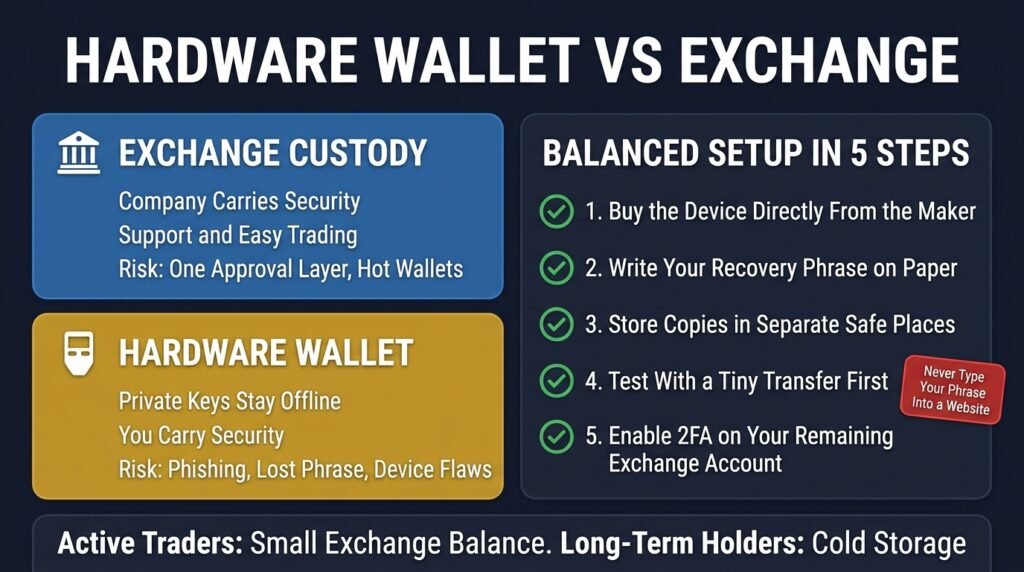
This incident revived an old argument in a new form. Supporters of self-custody say the phrase “not your keys, not your coins” proved right again. Exchange supporters answer that Binance paid for the loss and that a regulated company can absorb shocks that individuals cannot. Both sides make fair points. An exchange offers insurance-style protection, customer support, and easy trading. A private wallet offers control, privacy, and freedom from counterparty risk. However, each choice shifts responsibility. With an exchange, the company carries the burden of security. With a hardware wallet, the owner carries it. Active traders usually need exchange access, while long-term holders often prefer cold storage. The right answer depends on how you use your crypto, not on a single headline.
A Balanced Setup for Everyday Holders
You do not need to pick only one side. Many experienced holders split their coins across both models. They keep a small trading balance on a trusted exchange and move the rest into a hardware wallet. Start by buying a device directly from the manufacturer, because resellers can tamper with products. Next, write your recovery phrase on paper and store copies in separate safe places. Never type that phrase into a website or share it in a message. Then test the wallet with a tiny transfer before you move larger amounts. Finally, enable two-factor authentication on your remaining exchange account. Readers who want more practical steps can read the security and wallet articles on Blockyr and build a routine that fits their holdings.
Frequently Asked Questions
1. Did Binance really lose $6.3 billion?
Yes. Reports from Reuters and analysts at Elliptic describe a record theft of about $6.3 billion. Binance says it covered the losses with company funds and froze roughly $3 billion of the stolen assets with help from partners.
2. Did BNB crash after the hack?
No. BNB fell about 6.4% in one day and traded near $696, then stabilized. Bitcoin and Ether also dipped before the market steadied.
3. Are hardware wallets safer than exchanges?
They remove exchange and hot wallet risk because they keep private keys offline. However, they add risks such as phishing, lost recovery phrases, and device flaws. Safety depends on how you use them.
4. Should I move all my crypto off Binance?
Not necessarily. Active traders need exchange balances, while long-term holders often prefer cold storage. A split approach gives you both convenience and control.
Final Thoughts
The Binance hack tested the strongest exchange in crypto, and the exchange passed the financial test. It paid its users, reopened withdrawals, and kept BNB near its floor. Yet the event also exposed a weakness that no payout can fully erase. Users depend on someone else’s security, and attackers need only one gap. That reality fuels the hardware wallet boom and keeps the self-custody debate alive. Smart holders will not panic, and they will not stay careless either. They will compare risks, split their holdings, and protect their keys with discipline. Visit Blockyr for more security guides, and share this post with a friend who still keeps everything on one platform.