

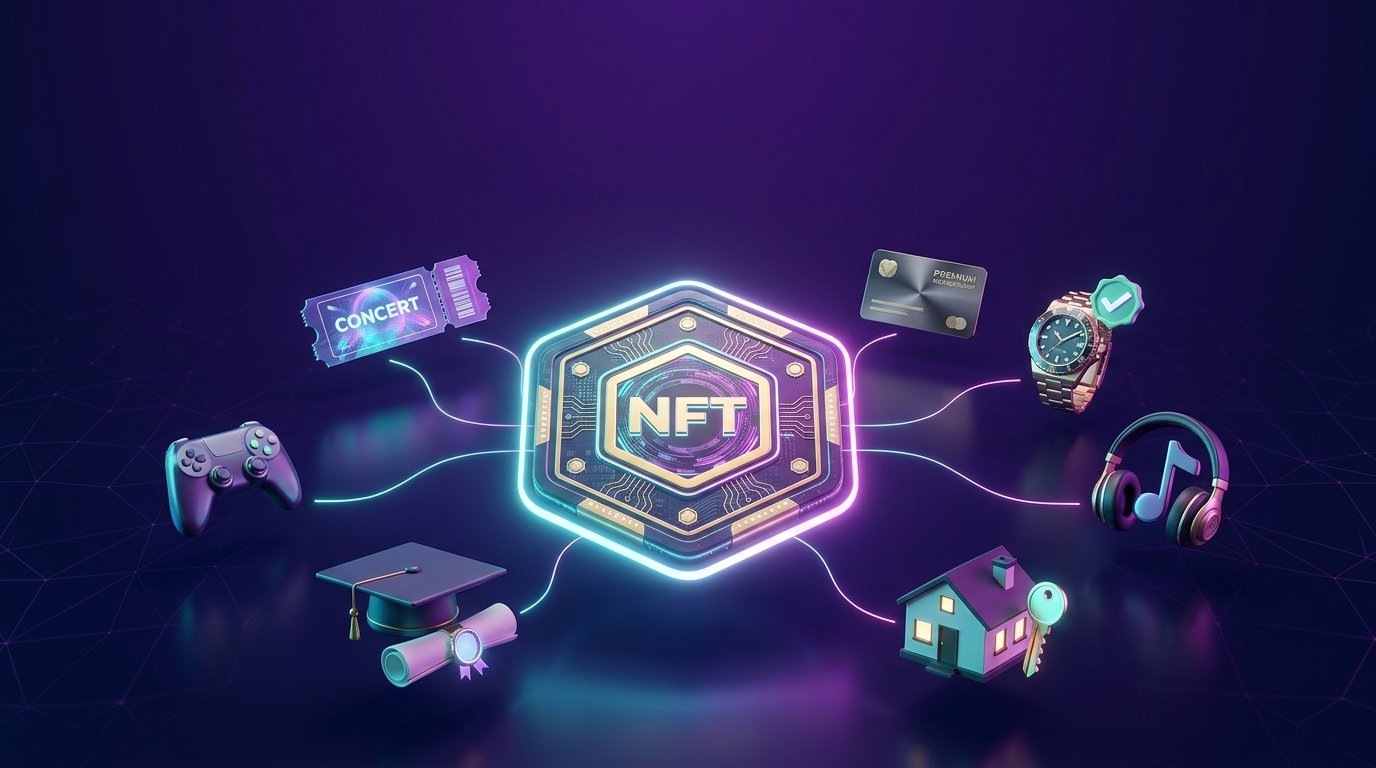
The real-world uses of NFTs now reach far beyond digital art. Early headlines focused on expensive JPEGs, but builders quietly turned non-fungible tokens into practical tools for gaming, ticketing, identity, and ownership records. An NFT works like a unique digital certificate that lives on a blockchain, as the Ethereum NFT guide explains. This guide walks through seven examples that show how the technology works today. Readers who want more background can explore Blockyr’s NFT guides and then see how each use case solves a real problem.
1. Gaming Assets: Popular Real-World Uses of NFTs
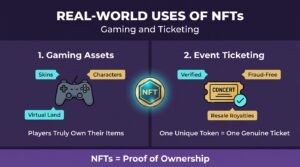
Gaming leads the real-world uses of NFTs because players already spend money on digital items. Studios now issue skins, characters, and virtual land as NFTs, so players truly own what they buy. Owners can sell items on open marketplaces instead of losing them when they quit a game. Developers also earn a share of every resale, which rewards long-term game design. Platforms such as Immutable build tools that help studios launch these assets quickly. Players can find more coverage in Blockyr’s blockchain games section. This model gives gamers real control over their digital property.
2. Event Ticketing Fights Fraud
Event organizers use NFTs as tickets because each token carries a unique, verifiable record. Buyers can prove a ticket is genuine before they pay, which cuts counterfeit sales. Organizers also program royalties into the token, so they earn a fee whenever fans resell a ticket. After the show, the ticket often turns into a digital souvenir that fans keep forever. Some venues add perks to the token, such as backstage access or discounts. Fans enjoy smoother entry, and promoters gain better data about who attends their events. This example shows how NFTs solve a problem that every concert crowd understands.
3. Digital Identity and Credentials
Schools and employers now issue diplomas, licenses, and certificates as NFTs. A person stores the credential in a personal wallet and shares it whenever needed. Employers then verify the record in seconds instead of waiting days for paperwork. Because nobody can quietly edit a blockchain entry, fake degrees become much harder to pass off. Many designers make these credentials non-transferable, so they stay tied to the person who earned them. Developers call these tokens soulbound, and they see them as a foundation for portable digital identity. This use case turns a simple token into a trusted proof of achievement.
4. Real Estate Deeds and Fractional Ownership
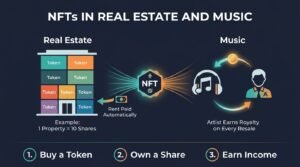
Real estate firms test NFTs as digital deeds and shares of property ownership. A token can represent a house, an apartment, or a fraction of a commercial building. Investors then buy small portions instead of paying for a whole property. Smart contracts handle rent payments and distribute income automatically, which reduces paperwork. Some land registries also test blockchain records to cut fraud and speed up transfers. Legal rules still vary by country, so buyers must check local law before they invest. Still, this idea shows how NFTs can connect digital tokens to physical assets.
5. Music and Creator Royalties
Musicians and creators sell NFTs that give fans direct access and ownership. An artist can release a song, an album, or a video as a limited edition and keep a larger share of the sales. Smart contracts send royalties to the artist every time a fan resells the token. Creators also bundle perks such as private concerts, early releases, and fan meetups. This system lets artists build income without relying on large labels or platforms. Fans, in return, support the people they love and hold a collectible that proves their early loyalty. These real-world uses of NFTs reward creativity directly.
6. Product Authenticity and Supply Chains
Luxury brands and manufacturers attach NFTs to physical products to prove authenticity. Each token records the origin, materials, and ownership history of a watch, a handbag, or a bottle of wine. Buyers scan a code and confirm the item is genuine within seconds. This record also helps resale markets, because new owners trust the product’s history. Supply chain teams use the same method to track goods from factory to shelf, which exposes delays and counterfeits. Brands protect their reputation, and customers protect their money. Few real-world uses of NFTs deliver such a clear, practical benefit.
7. Memberships and Loyalty Programs
Companies and communities use NFTs as membership passes. A holder unlocks exclusive content, discounts, events, or voting rights simply by connecting a wallet. Retail brands turn loyalty points into collectible tokens that customers trade or redeem. Online communities also let NFT holders vote on projects, which gives members real influence. Because the pass lives in the holder’s wallet, no company can easily delete it. Platforms like OpenSea let owners display and trade these passes freely. Beginners can learn how to start safely with Blockyr’s crypto resources.
FAQs on real-world uses of NFTs
What are the most common real-world uses of NFTs?
Gaming items, event tickets, digital credentials, property records, music, product authentication, and memberships lead the list. Each one uses the token as proof of ownership or access.
Do NFTs have value beyond digital art?
Yes. Value comes from utility, such as access, verification, and ownership rights. Prices still swing, so buyers should judge each project’s real purpose before they buy.
Are NFTs safe to buy?
NFTs carry risks, including scams, fake collections, and sharp price swings. Buyers should use trusted marketplaces, protect their wallets, and research every project.
Final Thoughts on real-world uses of NFTs
NFTs have grown far beyond their art-focused beginnings. The real-world uses of NFTs now cover gaming, tickets, credentials, property, music, authenticity, and memberships. Each example solves a practical problem with a verifiable token. The market still carries risk, and scams and price swings remain common, so readers should research before they buy. Anyone who studies these use cases can spot lasting projects and skip passing hype. Start small, keep learning, and treat every purchase with care. This article offers educational information, not financial advice.