

Stablecoin holders want their idle dollars to work, and many of them now want to earn yield with USDS. USDS is the stablecoin that Sky Protocol launched as the upgraded successor to DAI. The protocol offers a built-in savings feature that pays holders a variable rate for locking their tokens in a smart contract. You do not need a bank, a broker, or a lending platform to use it. You only need a compatible wallet and some USDS.
This guide explains how the Sky Savings Rate works, how you can start, and which risks deserve your attention. The yield looks simple on the surface, but the mechanics and the dangers behind it need careful study. Read each section before you move any funds, and visit Blockyr for more crypto guides.
What Is USDS and Why Does It Matter?
USDS is a dollar-pegged stablecoin that Sky Protocol, the project formerly known as MakerDAO, created in 2024. The team designed it to hold a value near one US dollar. Users can upgrade their existing DAI to USDS at a one-to-one ratio, and many holders did exactly that. The upgrade gave the ecosystem a fresh brand and new features while it kept the core mission of a decentralized dollar. Sky governance still guides the protocol, and token holders vote on major decisions. USDS also connects to a wider set of apps, wallets, and exchanges, so you can find it in many places. That reach makes USDS one of the larger on-chain stablecoins and a popular choice for savers.
How the Sky Savings Rate Works
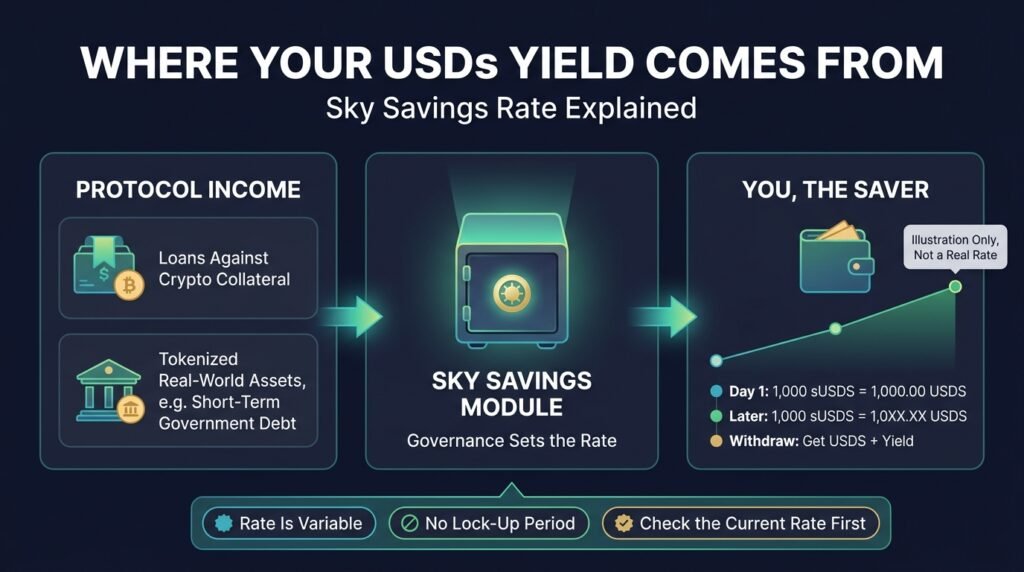
The Sky Savings Rate, often shortened to SSR, pays USDS holders who deposit their tokens into the savings module. The protocol earns revenue from its lending activity and its reserve assets, and it shares part of that revenue with savers. You do not need to claim rewards manually or run any complex strategy. The smart contract handles the accounting and lets your balance grow over time.
Where the Rate Comes From
Sky governance sets the savings rate, and the community can change it through votes. The rate reflects the income that the protocol earns from its collateral, which includes loans against crypto assets and exposure to tokenized real-world assets such as short-term government debt. When the protocol earns more, governance can raise the rate. When market conditions weaken, governance can lower it. The rate therefore moves with the market and does not stay fixed. You should check the current figure on the official Sky app before you deposit, because advertised numbers change often. Never treat an old percentage as a promise. A high rate also signals that the protocol takes on more demand or more risk, so always ask where the yield comes from.
What Happens When You Deposit
When you deposit USDS into the savings module, the contract gives you a receipt token called sUSDS. This token represents your share of the savings pool. The value of sUSDS rises against USDS as the protocol accrues interest, so you do not see your token count grow. Instead, each sUSDS redeems for more USDS as time passes. You can withdraw whenever you like, and the contract returns your original USDS plus the accrued yield. The process runs on-chain, which means you keep custody of your funds through your own wallet. The deposit and withdrawal each cost a network fee, so small balances can lose a noticeable share to gas on busy networks.
How to Earn Yield With USDS Step by Step
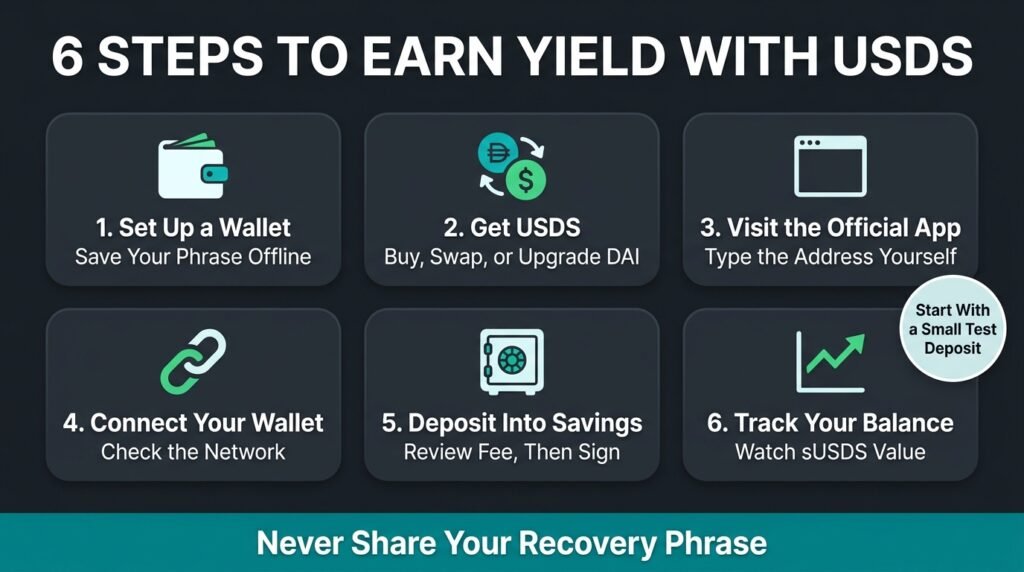
You can start in a few minutes if you already hold crypto. Follow this simple path:
- Set up a wallet. Choose a trusted self-custody wallet and write down your recovery phrase offline.
- Get USDS. Buy USDS on an exchange, swap another stablecoin, or upgrade your DAI.
- Visit the official app. Type the address of the Sky Protocol website yourself and never follow links from messages or ads.
- Connect your wallet. Approve the connection and check the network you use.
- Deposit into the savings module. Confirm the amount, review the fee, and sign the transaction.
- Track your balance. Watch your sUSDS value and compare it with your original deposit.
Start with a small test amount before you commit a large sum. A test deposit lets you learn the interface, see the real fee, and confirm that withdrawals work. Many careful users repeat this test every time they try a new network or app. This habit costs a few dollars and can save you from a costly mistake.
Benefits of the Savings Rate
The savings feature offers several advantages that attract both new and experienced users. Consider these main points:
- No lock-up period: You can withdraw your USDS at any time without a penalty from the protocol.
- Self-custody: You keep control of your wallet and never hand your keys to a company.
- Transparent rules: Anyone can inspect the contract and the governance votes on-chain.
- Passive process: You deposit once and let the contract accrue yield automatically.
- Wide integration: Many wallets and apps support USDS and sUSDS, so you can move funds easily.
These benefits make the option appealing to people who want a dollar-based return without trading volatile coins. A stablecoin saver avoids the sharp price swings that hit Bitcoin or Ethereum holders. However, a smooth experience does not remove risk. The same open system that gives you freedom also gives you full responsibility, and no support desk can reverse a mistaken transaction.
Risks to Know Before You Deposit
Every yield comes from somewhere, and every source carries a cost. Before you earn yield with USDS, you must understand the dangers that sit behind the percentage. The three biggest groups of risk involve the code, the collateral, and the rules that govern the protocol.
Smart Contract Risk
Smart contracts run on code, and code can contain bugs. Sky Protocol has a long history, and independent auditors review its contracts regularly. Audits reduce the chance of a flaw, but they never eliminate it. A hacker who finds an exploit can drain funds quickly, and the blockchain does not allow refunds. Wallet approvals add another layer of danger, because a malicious app can request permission to spend your tokens. Always check what you sign, and revoke old approvals through a trusted tool. Never deposit more than you can afford to lose, even in a battle-tested protocol.
Peg and Collateral Risk
USDS aims to stay at one dollar, but no stablecoin guarantees that outcome. The protocol backs USDS with a mix of crypto collateral, stablecoin reserves, and tokenized real-world assets. A sharp market crash can hurt crypto collateral, and a failure in a major reserve asset can shake confidence. If the market loses trust, the price of USDS can slip below one dollar, at least for a while. Past stablecoin collapses show that a small depeg can grow fast when panic spreads. Watch the peg price, read the protocol’s reports, and learn which assets back the token. Diversification across several stablecoins can limit the damage from a single failure.
Governance and Regulatory Risk
Governance votes shape the savings rate, the collateral list, and many other settings. A poor vote can lower your yield or add new risks to the system. Large token holders hold strong influence, so a small group can sometimes steer decisions. Regulation adds more uncertainty, because lawmakers around the world keep writing new stablecoin rules. A new law can change how exchanges list USDS, how apps serve users in your country, or how the protocol operates. You should check the rules in your own country, and you should keep records of your deposits and earnings for tax purposes. Tax treatment of yield differs from place to place, so ask a qualified professional.
Who Should Earn Yield With USDS?
This strategy suits users who already understand wallets and on-chain transactions. A long-term holder who keeps stablecoins idle for months can gain a steady return. A trader who needs a safe place to park profits between trades can also use the savings module. Beginners can try it too, but they should start small and read the documentation first. The option does not suit anyone who needs guaranteed returns, because the rate can fall at any time. It also does not suit anyone who cannot accept smart contract risk. Compare the yield with simpler choices, such as a regulated savings account, and decide which risk level fits your goals. Your emergency fund should stay in the safest place you can find.
Practical Tips to Reduce Your Risk
You can lower your exposure with a few disciplined habits. Apply these tips each time you deposit:
- Start small: Test with a minor amount and increase only after a smooth withdrawal.
- Verify every link: Type the official address yourself and bookmark it.
- Use a hardware wallet: Keep larger balances on a device that stores keys offline.
- Split your funds: Spread your savings across more than one protocol and stablecoin.
- Follow governance news: Read proposals that can change the rate or the collateral.
- Keep records: Save every transaction hash for tax and security checks.
These steps take little time and protect you from the most common losses. Scammers often copy official sites and send fake support messages, so stay alert at every step. A calm and patient approach beats a rushed decision. Remember that no one from the real protocol will ever ask for your recovery phrase.
Conclusion On Earning Yield With USDS
You can earn yield with USDS through the Sky Savings Rate, and the process stays simple once you understand it. You deposit your tokens, receive sUSDS, and watch your balance gain value as the protocol shares its revenue. The rate changes with governance decisions and market conditions, so you must check it often. The yield also carries real risks, including smart contract bugs, peg pressure, and shifting rules. Weigh those dangers against the return, start with a small test, and never invest money you cannot spare. This article offers education, not financial advice. Explore more guides on Blockyr to build your crypto knowledge step by step.