



Cryptocurrency trends move fast, and researchers now track several signals that could shape the next bull run. Analysts at firms like Grayscale argue that institutional demand, clearer rules, and new technology will drive the next cycle instead of the old four-year halving rhythm. Investors who understand these shifts can separate real momentum from noise. This guide explains the biggest trends researchers highlight, shows how each one affects the market, and warns about the risks that could slow progress. Readers can also follow Blockyr’s latest crypto coverage to pair these insights with fresh market updates.
Why Cryptocurrency Trends Now Move Beyond the Halving Cycle
For years, traders linked every bull run to Bitcoin’s halving. Researchers now challenge that habit. The research team at Grayscale describes a market where demand for scarce, store-of-value assets matters more than a fixed calendar. Macro researchers also point to central bank liquidity, because past rallies followed periods of easy money. Bernstein analysts suggested in 2025 that the current rally could stretch into 2027. These views do not guarantee profits, but they change how investors plan. Smart traders now watch liquidity, policy, and adoption data instead of counting the days since the last halving.
Institutional Adoption Fuels Market Liquidity
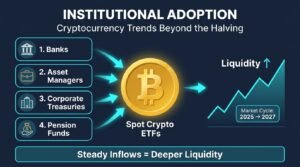
Banks, asset managers, and corporate treasuries now allocate real money to digital assets. Spot exchange-traded products opened regulated doors for pension funds and wealth managers, and those buyers hold positions longer than retail traders do. Their steady inflows deepen liquidity and calm violent price swings. Researchers expect this demand to continue because institutions want inflation hedges and portfolio diversification. Investors can track market capitalization and trading volume on public dashboards such as CoinMarketCap. When large players buy, smaller investors notice quickly, and sentiment usually follows.
Clearer Regulation Builds Investor Confidence
Regulation shapes cryptocurrency trends more than most investors admit. Grayscale’s 2026 outlook said a U.S. market structure bill could gain bipartisan support and give builders and exchanges clear federal rules. Clear rules reduce legal risk, so large firms enter the market with more confidence. Other countries also write licensing frameworks that protect users and punish fraud. Better oversight does not remove volatility, but it removes doubt about what the law allows. Projects that follow the rules attract capital, while careless operators lose trust. Many researchers therefore treat regulatory clarity as a leading signal for the next bull run.
AI Agents and Blockchain Create New Demand
Artificial intelligence now practically meets blockchain. Developers build AI agents that pay for data, computing power, and online services with crypto wallets and stablecoins. These machines settle tiny payments in seconds, which traditional banking rails cannot do efficiently. Analysts call this a machine-to-machine economy, and they expect it to create fresh demand for fast blockchain networks. Readers who want deeper explainers can browse Blockyr’s blockchain guides. This trend remains early, yet it gives the market a story beyond pure speculation. Projects with cheap, reliable settlement could benefit most.
Tokenization and Stablecoins Expand Real-World Use
Tokenization turns real-world assets such as bonds, funds, and property into blockchain tokens. Financial firms already test these products because they settle faster and cost less. Stablecoins push adoption further, since businesses use them for cross-border payments and treasury management. Users in emerging markets also rely on dollar-pegged tokens to protect their savings from local currency swings. Researchers see these use cases as durable cryptocurrency trends because they solve real problems. Every new integration brings fresh users, and every fresh user strengthens the network. This utility-driven growth could support the next bull run better than hype alone.

Risks That Could Slow the Next Bull Run
Every bullish thesis carries risks, and researchers name several. A major exchange or custodian hack could shatter institutional trust overnight. Some analysts warn that a delayed four-year cycle could still trigger a deep correction. Tight monetary policy may drain liquidity from risk assets, and political shocks can rattle markets quickly. Decisions by the Federal Reserve on interest rates remain a key signal for risk appetite. Investors should also watch leverage, because forced liquidations amplify every drop. Smart investors size positions carefully, diversify holdings, and never risk money they cannot afford to lose. For more analysis, visit Blockyr’s market insights.
Frequently Asked Questions
What are the biggest cryptocurrency trends for the next bull run?
Researchers highlight institutional adoption, clearer regulation, AI-driven payments, tokenization, and stablecoin growth. These forces add real demand to the market instead of relying on speculation alone, which makes them more durable than past hype cycles.
Does the Bitcoin halving still control crypto cycles?
Many researchers say the halving matters less than before. Liquidity, policy decisions, and institutional flows now influence prices more strongly. Some analysts still respect the four-year pattern, so investors should watch both views.
Can cryptocurrency trends guarantee profits?
No. Trends show direction, not certainty. Prices swing sharply, so investors should research every project, manage their risk, and consult a licensed financial advisor before they invest.
Final Thoughts about Cryptocurrency Trends
The next bull run may look different from earlier ones. Researchers see institutions, regulators, AI developers, and everyday users shaping the market together. Each trend in this guide adds real utility, and real utility supports longer-lasting growth than hype does. Investors who track these cryptocurrency trends can make calmer, better-informed decisions. Still, risks remain, and no forecast replaces personal research. Stay curious, stay cautious, and keep learning as the market evolves. This article offers educational information, not financial advice.