

Nobody expected a satellite internet company to end up on a military target list. But that’s exactly where things stand between Elon Musk and Iran right now, and the ripple effects are showing up in places you wouldn’t expect, including your crypto portfolio.
This isn’t a one-day headline. It’s a saga that’s been building since early 2026, moving from free internet for protesters to state media naming Musk’s companies as legitimate military targets, and it now sits at the center of how traders price geopolitical risk across Bitcoin, Ethereum, and oil markets.
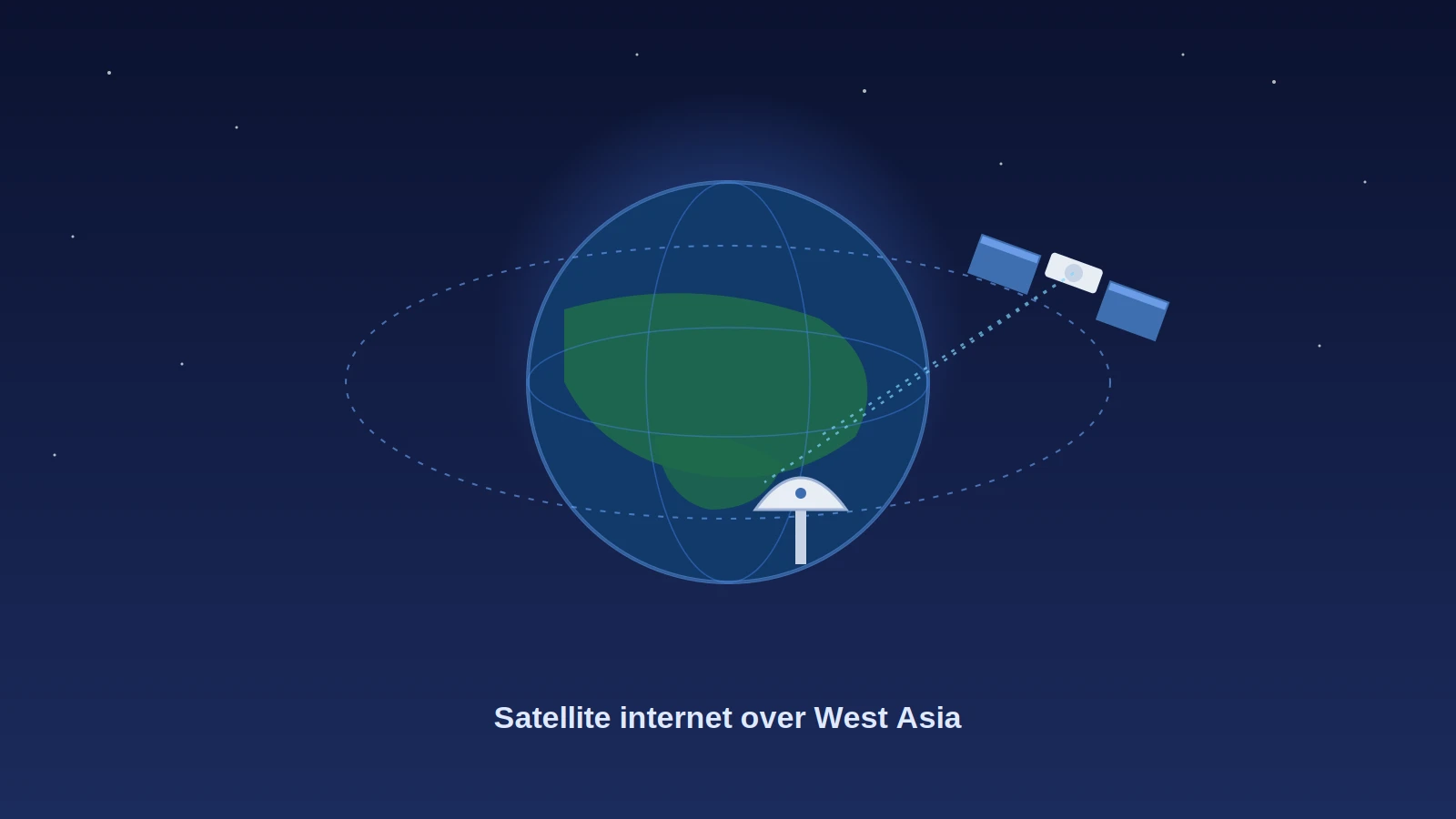
SpaceX’s Starlink beamed connectivity into Iran during the communications blackout of early 2026.
How Elon Musk and Iran Ended Up on a Collision Course
The story starts in January 2026. Iran’s government cut internet access to roughly 85 million people as anti-regime protests spread across all 31 provinces, the worst unrest since the 2022 Mahsa Amini demonstrations. Within days, Musk’s SpaceX quietly switched on Starlink access inside the country and waived the subscription fee.
A phone call between Donald Trump and Musk reportedly preceded the move. Trump had told reporters he planned to discuss restoring Iranian internet access with Musk directly, calling Starlink “a very good company” for the job. Days later, previously dormant Starlink accounts inside Iran lit up, and activists said the black-market terminals, smuggled in despite the risk of prosecution, finally had somewhere to connect.
Human rights researchers estimated around 50,000 Starlink receivers were already scattered across the country by that point. For a population staring at a total blackout, that’s a small window, but it was the only one available.
Iran Banned Starlink, Then Ended Up Depending On It
Here’s where the story gets genuinely strange. Iran had officially banned Starlink use back in mid-2025, treating it as Western infiltration. Then came the February 28, 2026 strikes, when the US and Israel hit Iranian military, nuclear, and government sites in a campaign that knocked the country’s internet traffic down to roughly one percent of normal levels almost overnight.
With the state’s own networks crippled, Iranian-linked hacking crews reportedly kept operating by routing through the very Starlink infrastructure Tehran had outlawed. Cybersecurity researchers at Check Point traced a group known as Handala using Starlink connectivity to stay online well into the strikes, even as it threatened retaliatory cyberattacks against Israel and the West on X, another Musk platform. The banned technology had become the backup generator for both sides of the same war.
Iran Declares Musk’s Companies Military Targets
By June 2026, the relationship curdled into open threat. Iran’s state-run Fars News Agency reported that Tehran now considers all of Musk’s commercial holdings across the Middle East, Starlink ground stations included, fair game for military strikes. The designation named specific facilities in Qatar, Jordan, the UAE, Oman, and Israel, and extended to X’s regional operations as well.
The reasoning Iranian officials gave wasn’t subtle. They argued Starlink and Starshield, its defense-oriented sibling, had been folded into US and Israeli drone and targeting operations, and that this made the infrastructure a legitimate wartime asset rather than a neutral telecom service. An unnamed source cited by Fars went further, alleging Musk-linked systems were used in strikes on water infrastructure in southern Iran.
What makes this a genuine escalation, rather than just angry rhetoric, is the geography. Attacking a Starlink ground station in Doha or Abu Dhabi wouldn’t just be a strike on an American company. It would be a strike on the sovereign soil of Gulf states that have no direct stake in the Musk-Iran feud, which is exactly why analysts flagged it as a meaningful widening of the conflict’s blast radius.
Jamming, Firmware Wars, and a Very Public Feud
Iran didn’t rely on threats alone. Iranian jamming efforts reportedly degraded Starlink service by as much as 80 percent in parts of the country during early 2026, and SpaceX responded by pushing firmware updates designed to help terminals dodge the interference. It’s a low-grade signal war that’s been running in parallel to the shooting war, largely invisible unless you’re one of the engineers on either side of it.
Grok, the Pentagon, and Musk’s Widening Iran Exposure
Musk’s Iran entanglement isn’t limited to satellites. In a sworn court statement, the Department of Defense’s chief digital and AI officer confirmed the Pentagon used Musk’s Grok AI system to help fire roughly 2,000 munitions at 2,000 distinct targets during a 96-hour window of the Iran campaign. The admission came out through an unrelated lawsuit, filed by the NAACP’s Mississippi chapter against Musk’s xAI over emissions from unpermitted gas turbines powering its Colossus 2 data center, but it put a second Musk company squarely inside the war’s targeting chain.
Add SpaceX’s expanding UAE footprint, reported talks about a SpaceX listing, and Musk’s appearance on a Trump-Modi call touching on the Iran war, and you get a picture of a single individual with commercial, technological, and quasi-diplomatic fingers in nearly every layer of the conflict. That concentration is unusual even by Musk’s standards, and it’s a big part of why his name keeps surfacing in Iran coverage that has nothing to do with Tesla or rockets.
Bitcoin and broader crypto markets have moved in sharp, short-lived swings around each Iran conflict headline.
Why Traders Are Watching the Musk-Iran Story, Not Just Iran Itself
Musk’s companies sit at a genuine chokepoint of information and military capability in this war, and that gives his name outsized weight as a market signal. When Starlink outages, jamming reports, or military-target designations hit the wires, they function as a proxy for how close the conflict is to spilling into Gulf infrastructure, and markets treat that spillover risk very differently from a routine skirmish.
The pattern by mid-2026 was fairly consistent. US Central Command’s July 7 strikes on more than 80 Iranian military targets, launched in response to Iranian attacks on commercial shipping in the Strait of Hormuz, sent Bitcoin from a monthly high near $65,500 to below $64,000 within hours. More than $350 million in leveraged positions were liquidated in the scramble. It wasn’t a collapse. It was a fast, sharp flinch, the kind of move that rewards traders who already had stop-losses set instead of ones scrambling to react.
Ethereum has consistently taken the harder hit of the two, falling two to three times more than Bitcoin during each flare-up. Fundstrat’s Tom Lee has pointed to ETH’s inverse relationship with oil prices as the likely driver: a Hormuz-driven oil spike stokes inflation fears, inflation fears raise rate-hike odds, and rate-sensitive assets like Ethereum get punished first. If you’re holding ETH as an inflation hedge through this conflict, that correlation is worth sitting with before you assume it’ll behave like digital gold.
The Strait of Hormuz Is the Real Pressure Point
None of this makes sense without the Strait of Hormuz, the narrow waterway that historically carried about a fifth of the world’s oil and gas shipments. Attacks on tankers moving through it have left the strait effectively closed for extended stretches in 2026, and Brent crude has swung violently every time tensions spike, at one point pushing past $120 a barrel before easing back.
Iran has even started collecting transit tolls through the strait payable in Bitcoin, a small but telling detail. It doesn’t mean Iran is quietly building a crypto reserve, and there’s no evidence of meaningful Bitcoin mining or state holdings inside the country. It does mean crypto rails are now touching the machinery of an active war zone in ways that would have sounded far-fetched a couple of years ago.
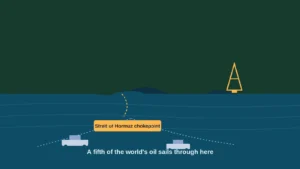
The Strait of Hormuz remains the single most-watched chokepoint for oil, and by extension, crypto market sentiment.
Prediction Markets Are Pricing the Musk-Iran Fallout Too
Platforms like Polymarket have seen hundreds of millions of dollars move through contracts betting on US-Iran escalation scenarios. When Fars named Musk’s companies as military targets, one widely cited market update noted the news pushed the probability of a nuclear deal being reached by mid-August down to roughly 1.8 percent yes. That’s not a subtle move. It’s traders reading a corporate-targeting story as a direct signal about the odds of diplomacy succeeding at all.
It’s a useful reminder that in this conflict, corporate headlines and geopolitical headlines have basically merged. A story about Starlink ground stations reads, to a prediction-market trader, exactly like a story about troop movements.
What This Means If You’re Trading Through the Noise
- Treat Musk-Iran headlines as a volatility signal, not a trading strategy on their own. The moves so far have been sharp but short, with Bitcoin recovering within days in most 2026 flare-ups.
- Watch Ethereum separately from Bitcoin. Its correlation with oil prices means it tends to underperform BTC specifically when Hormuz-related headlines break, not just during general risk-off moves.
- Keep an eye on leverage. The July 2026 escalation wiped out over $350 million in leveraged positions in a matter of hours, a reminder that geopolitical shocks punish overextended traders fastest.
- Don’t assume Iran holds meaningful crypto exposure. Its Bitcoin-denominated Hormuz tolls are a policy curiosity, not evidence of a crypto war chest.
None of this is a call to trade the news in real time. Geopolitical shocks are exactly the kind of event where confident short-term predictions tend to age badly, and the honest position is that nobody, including seasoned macro desks, has nailed the timing of every swing in this conflict.
Frequently Asked Questions
What did Elon Musk do for Iran?
Musk’s SpaceX activated free Starlink satellite internet access for people inside Iran in January 2026, after the government imposed a nationwide blackout during anti-regime protests. It gave protesters and journalists a way to get information out despite the shutdown.
Why did Iran call Elon Musk’s companies military targets?
In June 2026, Iranian state media said Musk’s Middle East holdings, including Starlink ground stations and X operations, were being added to a military target list because Tehran views them as tools supporting US and Israeli operations, including drone targeting.
Did the Pentagon use Elon Musk’s Grok AI in the Iran war?
Yes. A Department of Defense official confirmed in a sworn court filing that Grok was used to help direct roughly 2,000 munitions at targets during a 96-hour period of the conflict, according to reporting on an unrelated xAI lawsuit.
How has the Iran conflict affected Bitcoin and crypto prices?
Bitcoin has dropped roughly 2 to 4 percent within hours of each major escalation in 2026, then typically recovered within about a week. Ethereum has fallen harder each time due to its sensitivity to oil-driven inflation expectations.
Is the Strait of Hormuz still open?
Access has been repeatedly disrupted throughout 2026, with tanker attacks leaving the strait effectively closed for extended periods. Since roughly a fifth of global oil and gas shipments historically passed through it, closures have driven sharp spikes in Brent crude.