



The cryptocurrency market has experienced unprecedented growth over the past decade, attracting institutional investors, retail traders, and blockchain enthusiasts from around the globe. Yet beneath the surface of this booming digital asset ecosystem lies a troubling reality: $1.6 billion in crypto liquidity is sitting idle, creating significant inefficiencies in the market. This substantial amount of dormant capital represents not just a missed opportunity for investors, but a fundamental challenge to the maturation and stability of the entire cryptocurrency trading infrastructure.
Understanding why such a massive volume of digital asset liquidity remains unutilized is crucial for anyone involved in crypto trading, investment, or blockchain development. The issue touches on everything from market structure and regulatory constraints to technological limitations and investor psychology. When billions of dollars in potential trading capital cannot efficiently flow through markets, it affects price discovery, increases volatility, and creates friction for legitimate market participants.
This comprehensive article explores the multifaceted reasons behind the cryptocurrency liquidity stagnation, examining how various factors from decentralized finance (DeFi) protocols to centralized exchange design contribute to this phenomenon. By understanding these underlying causes, market participants can better navigate the current landscape and anticipate potential solutions that may reshape how digital assets are traded and utilized in the future.
The Magnitude of the Problem: Understanding the $1.6 Billion Idle Liquidity Crisis
The figure of $1.6 billion in idle cryptocurrency liquidity might seem abstract without proper context. To put this in perspective, this amount represents capital that has been deposited into various platforms—whether decentralized exchanges, liquidity pools, or centralized trading venues—but is not actively participating in transactions or generating returns for its providers. This is distinct from total market liquidity, which measures the ease with which assets can be bought or sold. Instead, this idle capital represents a distinct category of trapped funds that exist within the system but serve no productive purpose.
The accumulation of this dormant crypto capital stems from multiple sources within the blockchain ecosystem. Some of this liquidity is trapped in smart contracts that have become obsolete, while other portions sit in abandoned wallets or liquidity pools that offer insufficient incentives. Still more capital remains frozen in cross-chain bridges, wrapped token contracts, or legacy DeFi platforms that have lost market relevance. Each of these scenarios represents a different subset of the broader digital asset stagnation problem, yet collectively they paint a picture of significant inefficiency within cryptocurrency markets.
Market analysts and blockchain researchers have increasingly focused attention on this phenomenon because its implications extend far beyond simple opportunity costs. When crypto market liquidity becomes fragmented and inefficiently distributed, it creates cascading effects throughout the ecosystem. Smaller traders face wider bid-ask spreads, institutional investors encounter slippage when executing large orders, and the overall stability of cryptocurrency pricing mechanisms becomes compromised. The idle nature of this capital suggests that neither market forces nor platform incentives have successfully directed these resources toward productive uses.
Fragmentation Across Multiple Platforms: A Distributed Problem
One of the primary reasons $1.6 billion in cryptocurrency funds sits idle relates to the fundamental fragmentation of the crypto market across dozens of competing platforms. Unlike traditional financial markets that operate within unified regulatory frameworks and clearing systems, the cryptocurrency ecosystem comprises hundreds of independent exchanges, decentralized protocols, and blockchain networks. This fragmentation means that liquidity becomes scattered across numerous venues, each operating with distinct trading pairs, fee structures, and user bases.
Centralized exchange design has inadvertently contributed to this liquidity fragmentation. Major platforms like Binance, Coinbase, and Kraken each maintain separate order books and trading environments. A trader wishing to access liquidity across multiple platforms must split their capital and maintain accounts on each exchange. This dispersion of digital assets across platforms creates pockets of illiquid capital that cannot easily consolidate to where market demand is greatest. Furthermore, regulatory differences between jurisdictions have forced exchanges to restrict which users can access specific trading pairs, further splintering the available crypto trading liquidity.
The rise of decentralized finance has paradoxically intensified this fragmentation problem. While DeFi protocols promised to eliminate intermediaries and create more efficient markets, the proliferation of different decentralized exchange solutions has instead created yet another layer of fragmentation. Each DEX operates independently with its own liquidity pools, fee structures, and user interfaces. A liquidity provider might deposit assets into an Uniswap pool on Ethereum, while simultaneously holding capital in Curve for stablecoin trading, and maintaining positions in various other decentralized protocols. The result is that billions of dollars in cryptocurrency capital become distributed across incompatible systems, unable to be mobilized efficiently when market opportunities arise.
Cross-Chain Complexity Deepening the Fragmentation Challenge

The expansion of blockchain networks beyond Ethereum has created additional layers of complexity. Bitcoin, Ethereum, and numerous Layer-2 solutions each maintain separate ecosystems with distinct liquidity pools and trading venues. A user holding assets on Polygon cannot directly trade on Solana without executing a bridge transaction—a process that introduces both risk and friction. Many users have responded by maintaining multiple wallets across different chains, effectively multiplying the fragmentation problem. Some of this capital gets stuck in bridge contracts during failed or slow transactions, becoming temporarily or permanently idle.
Regulatory Uncertainty and Compliance Barriers
Another critical factor contributing to the cryptocurrency liquidity stalemate involves the complex and often contradictory regulatory environment surrounding digital assets. Regulatory uncertainty has prompted both exchanges and users to take an overly cautious approach to capital deployment, effectively mothballing significant portions of available crypto liquidity. When the legal status of certain trading activities remains ambiguous, prudent market participants choose to keep capital in reserve rather than risk regulatory penalties or account seizures.
Cryptocurrency regulation has become increasingly stringent in major jurisdictions, particularly following increased scrutiny from financial regulators in the United States, European Union, and Asian markets. These regulatory frameworks often require exchanges to implement know-your-customer (KYC) procedures, anti-money laundering (AML) controls, and position limits that restrict how much capital a single trader can deploy. While these measures serve legitimate purposes in combating financial crime, they have also created bottlenecks that prevent capital from flowing freely to where it would be most productively employed.
The regulatory approach to decentralized finance platforms remains particularly murky. Regulators are still determining whether DEX operators bear responsibility for the transactions occurring on their platforms, whether liquidity providers should be classified as market makers with associated regulatory obligations, and how decentralized protocols should report transaction data for tax and compliance purposes. This ambiguity has discouraged institutional investors and risk-averse participants from deploying substantial capital to DeFi protocols, leaving substantial idle balances instead.
Geographic Regulatory Constraints
Different countries maintain vastly different approaches to cryptocurrency regulation. Some jurisdictions have created favorable conditions for crypto trading, while others have implemented near-total bans on cryptocurrency activities. Users in restricted jurisdictions often maintain dormant cryptocurrency holdings because they cannot readily convert them to fiat currency without violating local laws. This creates pockets of idle digital assets that have essentially become trapped by geographic regulatory barriers. The overall effect is that billions of dollars in global cryptocurrency capital faces restrictions on deployment based on the location of its current holders.
Technical Limitations and Legacy Infrastructure
The technical architecture of cryptocurrency systems and the legacy infrastructure upon which many platforms operate present additional barriers to efficient crypto capital allocation. Many older DeFi protocols were designed during the early days of blockchain technology when transaction volumes were far lower and smart contract optimization techniques were less sophisticated. These legacy systems now face severe congestion during periods of high trading volume, causing transaction failures and discouraging users from deploying capital.
Smart contract vulnerabilities and the history of protocol hacks have made many institutional investors extremely cautious about deploying capital to unknown or less-established platforms. When a liquidity pool suffers an impermanent loss or a protocol experiences a security breach, the affected capital often remains idle for extended periods as investors assess whether they wish to continue participating. The lack of standardized blockchain security auditing and the difficulty many non-technical investors face in evaluating smart contract code has created a trust gap that inhibits capital deployment to newer platforms.
Transaction costs present another significant barrier to efficient cryptocurrency liquidity management. On the Ethereum network, particularly during periods of congestion, a single transaction might cost between $50 and $500 in gas fees. These costs create minimum deployment thresholds below which it becomes economically irrational to move capital between platforms or pools. Consequently, many users simply leave capital idle in exchange wallets rather than pay substantial fees to redeploy it to potentially more lucrative opportunities.
Layer-2 Adoption Bottlenecks
While Layer-2 scaling solutions such as Arbitrum and Optimism offer reduced transaction costs, adoption remains fragmented. Liquidity on these secondary chains often remains isolated from the main Ethereum network due to bridge risks and user unfamiliarity. Consequently, substantial amounts of capital exist on Layer-2 platforms but remain underutilized because the trading activity and market depth sufficient to employ that capital efficiently simply does not exist at those secondary venues. This creates a catch-22 situation where capital cannot generate sufficient returns to justify the costs of bridge operations needed to redeploy it.
Economic Incentives and Yield Farming Misdirection
The structure of economic incentives within decentralized finance has contributed significantly to cryptocurrency liquidity stagnation. During the height of yield farming crazes, platforms offered extraordinarily high returns to attract liquidity to their protocols. However, many of these incentive programs were unsustainable, ultimately collapsing and leaving investors with substantial idle holdings as reward tokens lost value. The residual effect has been investor skepticism toward new incentive programs, resulting in reluctance to deploy capital even when returns appear genuinely attractive.
Liquidity mining rewards became a problematic mechanism for attracting digital assets to less-established protocols. Users flooded capital into protocols offering high token rewards, often with the intention of extracting those rewards and then withdrawing their underlying capital. This created artificial liquidity that evaporated once incentive programs ended. The subsequent collapse of numerous protocols that relied on unsustainable yield farming has made many investors wary of deploying capital to platforms offering seemingly attractive returns, preferring instead to keep their capital idle in conservative holdings.
The concentration of liquidity incentives on a small number of established protocols has created a bifurcated market. Capital flows toward the platforms offering the highest returns and greatest trading volume, while numerous smaller platforms struggle to attract sufficient liquidity to operate efficiently. Rather than fragmenting their holdings across multiple platforms, many users simply keep substantial capital idle, waiting for opportunities that offer both compelling returns and established credibility.
Staking and Impermanent Loss Concerns
Decentralized exchanges that operate as automated market makers (AMMs) expose liquidity providers to impermanent loss—a phenomenon where the value of a liquidity provider’s position decreases compared to simply holding the underlying assets. This technical risk has made many conservative investors hesitant to deploy capital to trading protocols, preferring instead to hold digital assets in simple custody positions. The complexity of calculating and understanding impermanent loss creates a barrier to entry that prevents many otherwise interested participants from engaging with DeFi liquidity pools, leaving such pools undercapitalized relative to market demand.
Market Volatility and Risk Aversion
The inherent volatility of cryptocurrency markets creates psychological and economic barriers to crypto capital deployment. During periods of extreme price fluctuations, many investors respond rationally by moving capital to stablecoins or withdrawing entirely to fiat currency. However, the transition back to deployment after volatility subsides is often incomplete, as investors struggle with timing anxiety. Some proportion of capital that transitions to conservative positions during volatile periods never returns to productive trading activities, instead remaining idle as investors wait for perfect re-entry conditions that never materialize.
Cryptocurrency price volatility has been particularly pronounced in relation to macroeconomic developments and regulatory news. When major announcements emerge regarding potential regulation or the status of key players in the crypto industry, trading activity sometimes freezes entirely. Sophisticated traders recognize these windows of heightened uncertainty and reduce their deployed capital, moving it to safer venues. This creates cascading effects where reduced trading volume diminishes incentives for others to maintain deployed capital, leading to further withdrawals and increasing idle balances.
The correlation between crypto markets and broader financial markets has intensified in recent years, meaning that cryptocurrency capital has become subject to the same risk-off dynamics affecting traditional assets. When equity markets decline sharply or inflation concerns rise, investors across all asset classes become more risk-averse, moving capital away from speculative positions toward safety. The cryptocurrency market, as a younger and more volatile asset class, experiences more severe capital outflows during these periods, with significant portions remaining idle during recovery periods.
Liquidity Pools and Inefficient Capital Allocation
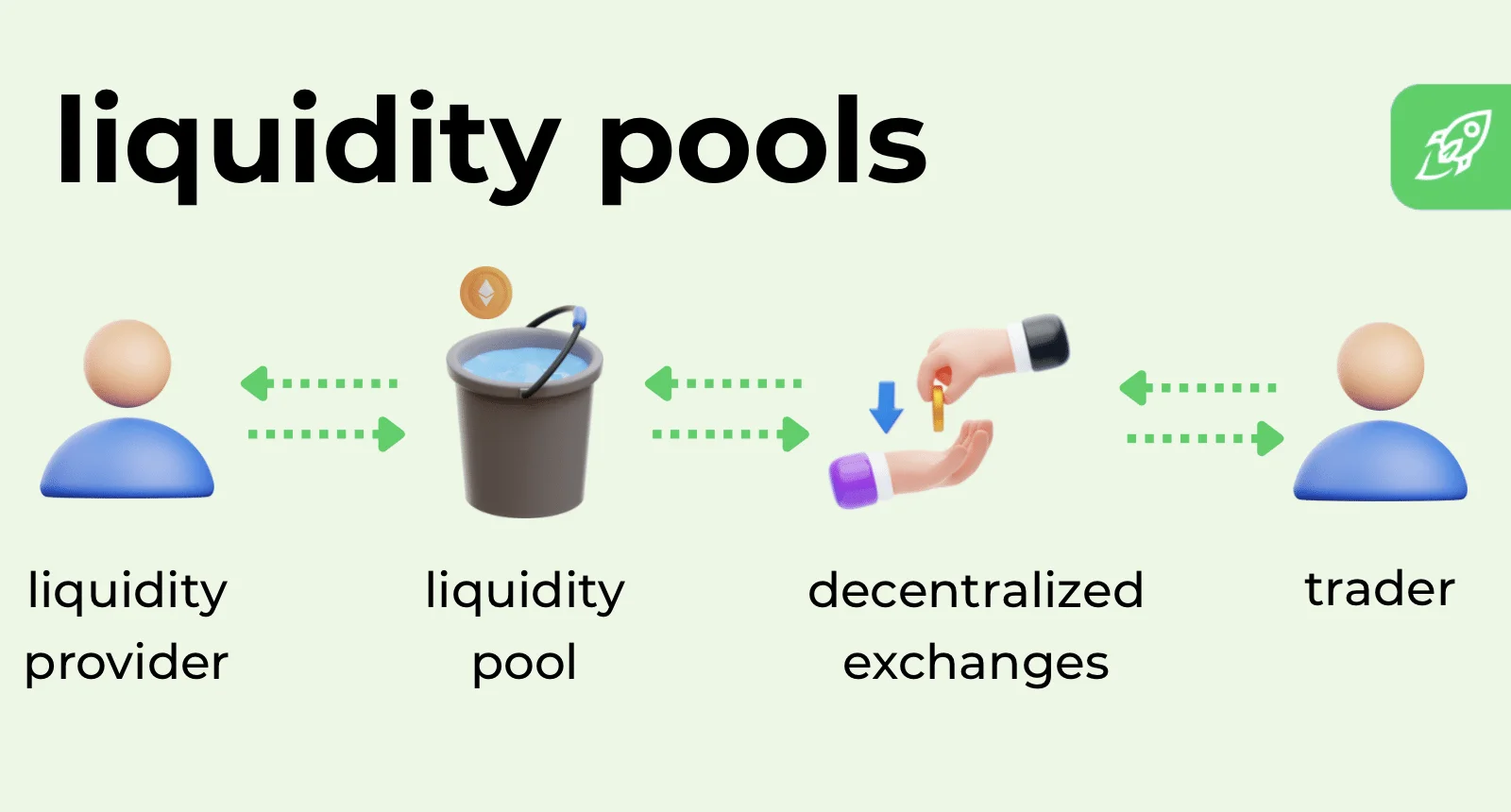
Decentralized exchange liquidity pools, while conceptually elegant, have created practical inefficiencies in cryptocurrency capital distribution. Liquidity providers deposit capital into pools with the intention of earning trading fees, but the actual utilization of that capital varies enormously. Some pools experience constant trading activity while others sit dormant for extended periods. A liquidity provider might deposit assets into a pool that initially seems promising but subsequently falls victim to poor trading execution or shifting market conditions, leaving their capital idle while they wait for better opportunities.
The mechanics of AMM-based exchanges create situations where substantial portions of pool capital never actually participate in trades. In an automated market maker model, capital is distributed across a pricing curve, with only a portion of assets near the current market price actively used in transactions. The remainder of the pool capital essentially sits idle, serving as a reserve to accommodate large trades but not actively participating in the price discovery process. This is a structural feature of current DeFi protocol design that necessarily creates idle capital as a side effect of how these systems function.
Conclusion
The $1.6 billion in idle cryptocurrency liquidity represents a fundamental challenge to market efficiency within the digital asset ecosystem. This dormant capital stems from multiple interconnected causes: market fragmentation across competing platforms, regulatory uncertainty that discourages deployment, technical limitations inherited from legacy infrastructure, misaligned economic incentives that disappointed investors, and the inherent volatility that makes many participants cautious about capital deployment.
Addressing this challenge will require coordinated efforts across multiple dimensions. Improved interoperability between different blockchain networks and trading venues could reduce fragmentation. Clearer regulatory frameworks would reduce uncertainty and encourage institutional participation. Enhanced technical infrastructure and improved smart contract standards would reduce both risks and transaction costs. More thoughtfully designed economic incentive structures could better align liquidity provider interests with platform sustainability.
The cryptocurrency market will mature significantly when this idle capital becomes productively deployed, either through technical innovation, regulatory clarity, improved platform design, or some combination thereof. Until then, the existence of $1.6 billion in underutilized digital assets serves as a reminder that even within the innovative blockchain ecosystem, significant inefficiencies persist that constrain the potential of decentralized finance and cryptocurrency trading. As the industry evolves, the ultimate test of maturation will be whether these substantial idle balances can be mobilized to create more efficient, resilient, and genuinely decentralized financial markets.
Frequently Asked Questions
Q1. Why does idle cryptocurrency liquidity matter to regular traders?
Idle cryptocurrency liquidity affects regular traders by creating wider bid-ask spreads and increased slippage when executing trades. When substantial amounts of capital sit unused rather than available for trading.
Q2. How does regulatory uncertainty specifically contribute to idle cryptocurrency holdings?
Regulatory uncertainty creates decision paralysis among crypto market participants. When the legal status of certain trading activities or token types remains unclear, sophisticated investors and institutions adopt conservative positions by keeping capital in reserve rather than deploying it to potentially non-compliant trading activities.
Q3. What is impermanent loss and why does it discourage DeFi liquidity provision?
Impermanent loss occurs in automated market maker protocols when the value of assets in a liquidity pool diverges significantly from their original value. If you deposit two assets into a pool at a 1:1 ratio and their prices move such that you’d be better off simply holding them rather than having them in the pool.
Q4. Could better technology solve the idle liquidity problem?
Technology can certainly help address the idle liquidity issue, but it cannot solve the problem entirely on its own. Cross-chain bridges that operate with greater speed and security could reduce friction in moving capital between blockchain networks. Improved smart contract architectures could reduce gas costs and increase transaction efficiency.
Q5. How might future cryptocurrency market development reduce idle liquidity?
Future developments could reduce idle liquidity through several mechanisms. Spot exchange-traded funds (ETFs) and other institutional vehicles could provide safer on-ramps for capital deployment without requiring individual investors to understand complex DeFi mechanics.