

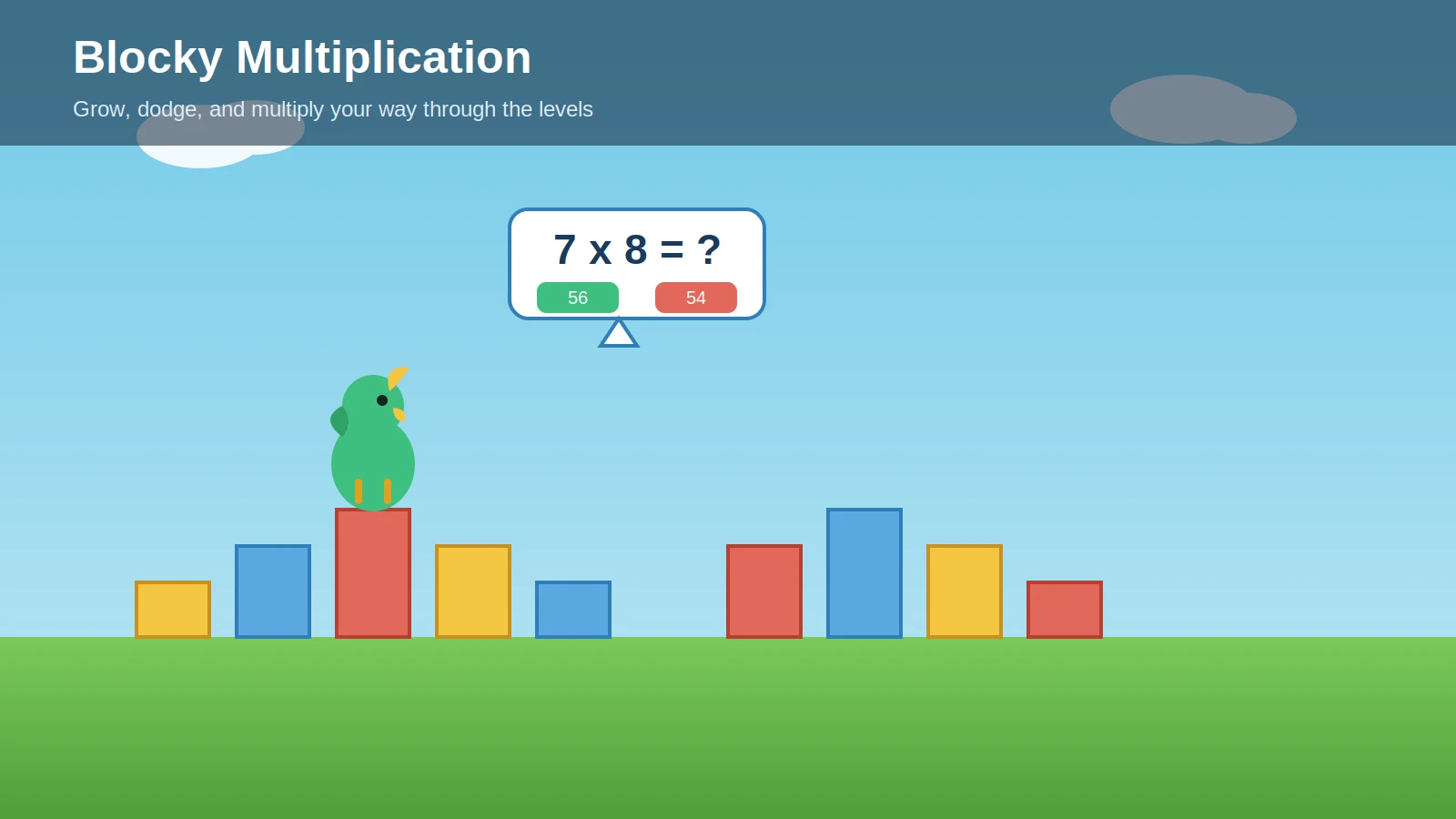
I spent an evening trying to figure out exactly how blocky multiplication works, and ran into something I didn’t expect: half the pages describing it don’t agree with each other. One site says you’re growing a parrot by stacking blocks. Another says you’re dragging numbered tiles onto a grid. A third describes falling blocks you have to catch in time. They can’t all be the same game, and honestly, they aren’t. That confusion is exactly the gap this guide fixes.
Here’s the actual game, how it plays, why so many write-ups get the mechanics wrong, and what genuinely helps if you’re using it to build multiplication fluency rather than just killing ten minutes of screen time.
The original blocky multiplication game centers on Blocky the parrot, not falling tiles or drag-and-drop grids.
What Is Blocky Multiplication?
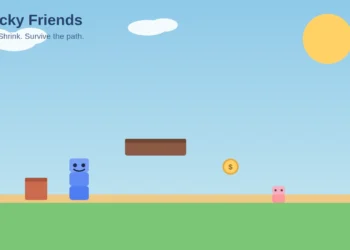
The original blocky multiplication is a browser-based educational game where you guide Blocky, an animated parrot, through obstacle-filled levels by growing or shrinking at the right moments. Before each run starts for real, you answer a multiplication question. Get it right and the level begins with Blocky ready to go. The further you progress, the harder the multiplication questions get, layering math practice directly onto the arcade mechanic instead of bolting it on as an afterthought.
Quick snippet answer: Blocky multiplication is a browser math game where players solve multiplication problems to unlock levels, then guide a parrot character named Blocky through obstacles by growing or shrinking to avoid hills, holes, and tunnels.
How to Play Blocky Multiplication: Core Mechanics
The loop is simple enough for a seven-year-old to pick up in one try, and that simplicity is the whole point.
- A multiplication question appears with two possible answers before the level begins
- Pick correctly and the run starts, Blocky begins moving through the level automatically
- Grow Blocky by building blocks to clear taller obstacles, or shrink to fit through narrow gaps
- Hitting another block ends the run immediately, timing and patience matter as much as the math
- Later levels raise both the physical difficulty and the complexity of the multiplication questions
What makes this format work better than a plain worksheet is the immediate stakes. Get the multiplication question wrong and you don’t get to play that round at all. That’s a much stronger feedback loop than circling an answer on paper and waiting for a teacher to grade it later.
Why So Many Blocky Multiplication Guides Contradict Each Other
This is worth calling out directly because it trips up a lot of parents and teachers searching for this game. The name blocky multiplication gets reused across at least three genuinely different products, and most of the content ranking for this keyword blurs them together, sometimes describing mechanics that don’t belong to any of them.
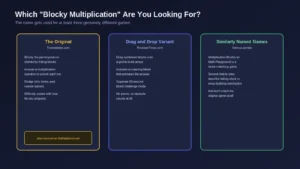
Three different games share a very similar name. Knowing which one you’re looking for saves a lot of confusion.
The Original Parrot Game
Hosted on Timestables.com, this is the version described above: Blocky the parrot, growth and shrink mechanics, obstacle dodging, and multiplication questions gating each run.
The Drag-and-Drop Grid Variant
A separate game, also using the blocky multiplication name, has players drag numbered blocks onto a grid to build multiplication arrays, with a slower-paced Learning Mode alongside a 60-second timed challenge. There’s no parrot, no obstacle course, and no growing or shrinking mechanic at all. It’s a genuinely different game wearing a similar name.
Similarly Named but Unrelated Games
Math Playground’s Multiplication Blocks is a separate factor-matching game where you combine blocks that multiply to a target product. Several listicle-style pages describe falling-block mechanics or three-digit timed challenges that don’t match the original game at all, which strongly suggests some of that content was written without anyone actually playing it.
Is Blocky Multiplication Good for Learning Times Tables?
Genuinely, yes, with one honest caveat. The instant unlock mechanic reinforces quick recall well, and the obstacle-dodging reward keeps younger kids engaged far longer than a static worksheet would. What it doesn’t replace is foundational understanding of why multiplication works the way it does, arrays, repeated addition, and place value are still better taught through direct instruction first. Use this as a fluency-building supplement after a concept has already clicked, not as the tool that teaches the concept from zero.
Strategy Tips for Blocky Multiplication
Most write-ups on this game stop at describing the rules. Here’s what actually moves the needle on results.
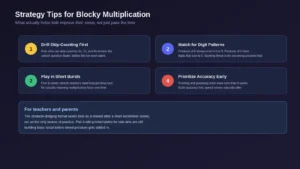
Small habits matter more than raw screen time when it comes to actual skill gains.
- Drill skip-counting by 6s, 7s, and 8s separately, those are the facts kids hesitate on most before an unlock question
- Teach the digit patterns: products of 5 always end in 0 or 5, and products of 9 have digits that add up to 9
- Keep sessions to five or seven minutes, longer grinding sessions don’t improve retention proportionally
- Prioritize accuracy before speed, guessing to beat the clock costs more runs than it saves early on
If your kids enjoy this style of browser-based learning game, our roundup of Weebly-hosted browser games covers a similar range of lightweight, classroom-friendly titles worth bookmarking alongside it.
Is Blocky Multiplication Free and Classroom-Safe?
Yes, the original version on Timestables.com is free to play directly in a browser with no account or download required, which is exactly why it shows up so often as a classroom early-finisher activity. It runs on modern web technology rather than legacy Flash, so unlike a lot of older browser games, it doesn’t need an emulator or workaround to keep working in 2026. That said, always check with your specific school’s content filtering policy before assigning it, since access can vary by district even for genuinely safe, ad-light educational tools.
If you’ve dealt with older Flash-based browser games that stopped working after Flash Player’s shutdown, our guide on Gluey and similar retro puzzle games walks through what changed and how those older titles are still playable today.
How Blocky Multiplication Compares to Other Multiplication Games
If the parrot format isn’t quite the right fit, a few alternatives cover similar ground differently. Math Playground’s Multiplication Blocks leans more purely into factor-matching without the arcade dodging layer, which suits kids who find the obstacle course distracting from the actual math. The drag-and-drop grid variant works well for visual learners who benefit from physically arranging arrays rather than answering multiple-choice questions under time pressure. None of these are strictly better, they emphasize different skills, so it’s worth trying more than one to see which format actually holds a specific kid’s attention.
Why Times-Table Practice Games Exist in the First Place
Multiplication fluency is one of those skills that quietly gates a huge amount of later math. Long division, fractions, algebra, all of it assumes a student can recall basic products without stopping to work them out from scratch every time. Traditional practice, flashcards and timed worksheets, works, but it asks kids to sit through repetition with almost no built-in reward beyond a grade. Games like blocky multiplication exist because that repetition gap is real: kids will voluntarily replay a level dozens of times chasing a personal best in a way they’d never voluntarily redo the same worksheet. The multiplication question isn’t decoration bolted onto a game, it’s the actual gatekeeper for the fun part, which is exactly the design choice that makes it stick.
This isn’t a new idea specific to this one game. Educational game design has leaned on the same principle for decades: attach genuine repetition to a reward loop the brain actually wants to chase, and retention improves compared to repetition for its own sake. Blocky multiplication just applies that principle cleanly, without excessive monetization or unrelated content bloated around the core mechanic the way a lot of mobile app versions of similar concepts tend to do.
Getting the Most Out of Blocky Multiplication at Home
If you’re a parent rather than a classroom teacher, a few small adjustments make this far more effective than just handing over a tablet and walking away.
- Sit with your child for the first few sessions to see which times tables consistently trip them up
- Turn missed questions into a two-minute verbal drill afterward, right while the mistake is still fresh
- Treat higher levels as a milestone worth acknowledging, not just background screen time
- Rotate it with a physical worksheet or flashcard set weekly so recall isn’t tied to one single format
None of this requires a rigid schedule. Ten focused minutes a few times a week, paired with a little attention to which specific facts are slowing your child down, beats an hour of unsupervised play by a wide margin. The game does the motivational work, your job is just noticing the patterns it surfaces.
Frequently Asked Questions
What is blocky multiplication?
Blocky multiplication is a browser-based educational game where players answer multiplication questions to unlock levels, then guide a parrot character named Blocky through obstacles by growing or shrinking to avoid hazards like hills, holes, and tunnels.
Is blocky multiplication free to play?
Yes, the original version hosted on Timestables.com is free to play in any modern browser with no account, download, or payment required, making it a common classroom early-finisher activity.
What age group is blocky multiplication best for?
It works best for children roughly ages 7 to 11 who are actively building multiplication fluency, typically grades 2 through 5, though older kids sometimes use it for quick mental math warm-ups too.
Why do different websites describe blocky multiplication differently?
The name is used for at least three separate games with different mechanics, the original parrot and obstacle game, a drag-and-drop grid variant, and unrelated factor-matching games. Many articles blend these descriptions together inaccurately.
Does blocky multiplication teach multiplication concepts or just drill facts?
It primarily drills quick recall of multiplication facts rather than teaching the underlying concept. It works best as a fluency-building supplement after a child already understands multiplication through direct instruction, not as a first introduction to the concept.
Can blocky multiplication be used for classroom centers or stations?
Yes, it’s commonly used as a rotation activity or early-finisher task since it requires no account setup and loads quickly on shared classroom devices. Pair it with a short verbal review afterward so the practice reinforces facts rather than just passing time between activities.
Final Take
Blocky multiplication earns its spot in a lot of classrooms honestly. The instant-feedback loop, growing or shrinking to dodge trouble right after answering a math question, genuinely reinforces quick recall better than most static drills manage. Just make sure you’re looking at the actual original game before trusting a write-up’s description of the mechanics, and treat it as a fluency booster sitting alongside real instruction, not a replacement for it.