



A record theft usually crushes the token of the platform that suffers it. Binance lost about $6.3 billion in late October 2026, yet its native coin did not collapse. BNB slipped, tested support near $700, and then steadied. That result surprised many traders who expected a repeat of past exchange disasters. This blog tests the BNB floor from every angle. It explains how the market reacted, why buyers defended the price, and which levels matter next. It also covers the risks that still hang over the token. Whether you hold BNB or only watch it, you will learn what this stress test revealed. Read on to see where the floor stands now.
What Pressure Did the Binance Hack Put on BNB?
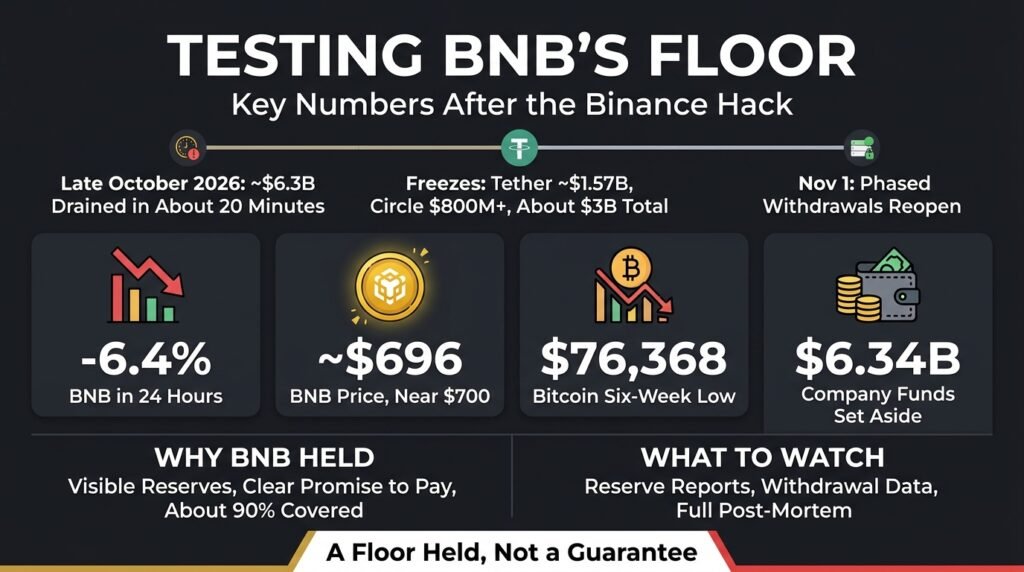
The hack hit BNB from two directions at once. First, it shook confidence in the exchange that gives the token most of its demand. Second, it arrived while the wider market already looked weak. According to The Block, Bitcoin slid below $77,000 on the day of the attack. Chainalysis estimated that attackers took roughly $5.9 billion at first, and later reports raised the figure to about $6.3 billion. Binance told users that it would cover all losses and that it had frozen around $3 billion with partner help. Traders still faced a hard question. Would customers abandon the platform, and would they dump the token with it? The first trading sessions gave the first answers.
The First 24 Hours of Selling
Selling arrived fast, but it stayed controlled. Reuters reported that BNB fell about 6.4% over one day and traded near $696. Bitcoin touched a six-week low of $76,368, and Ether dropped to a two-month low before both markets stabilized. Some trackers showed a slightly larger dip during the sharpest moment, but buyers stepped in before the slide deepened. Rick Maeda from Laevitas called the reaction fairly contained and described the BNB drop as modest for possibly the largest exchange theft ever. That comment captured the mood well. Panic never took over, and large holders did not rush to dump their coins. This calm response gave BNB room to find its footing.
(Inner image 1 goes here)
Why the BNB Floor Held Near $700
Several forces explain why the BNB floor held. Binance set aside about $6.34 billion of its own funds, so users saw a concrete plan to repair the damage. The exchange also restored withdrawals within days, which removed the fear of a frozen platform. In addition, BNB already sat well below its peak before the hack. Reports showed the token down roughly 35% over the previous year, so many sellers had already left. That history left fewer weak hands to panic. CoinGecko data from October 31 showed BNB near $702 with a market cap around $92 billion, which kept it among the top four assets by size. A large, liquid market absorbs shocks better than a small one. Together, these factors built a surprisingly firm base.
Technical Levels Traders Watch
Chart readers focus on a few clear zones. FXStreet noted that BNB rebounded above $700 and leaned on short-term support from its 200-day exponential moving average. One market analysis listed support near $682, then $663 and $637. The same analysis placed resistance near $730, then $760 and $796. Traders treat these numbers as guides, not guarantees. A close below $682 would weaken the floor, while a push above $730 would show real recovery strength. FXStreet also warned that momentum indicators still lag and that the broader technical outlook stays bearish. Therefore, the bounce proves resilience, not a confirmed reversal. Smart traders wait for confirmation before they call a new uptrend.
How Binance’s Reserve Promise Supported the Token
A promise only helps when the market believes it. Binance backed its promise with visible numbers. The company said it had covered roughly 90% of the stolen amount from its own funds and planned to acquire the remaining assets through over-the-counter channels. It also kept a dedicated reserve fund that exists to protect users after security breaches. Co-CEO Yi He argued that the frozen portion represented only a small share of total user assets and public reserves. These statements mattered because BNB tracks the health of the exchange. If users doubted the payout, the token would fall harder. Instead, the reserve story gave holders a reason to wait. That patience supported the BNB floor during the most fragile days.
Proof of Reserves and Market Confidence
Binance followed its promise with a fresh proof-of-reserves snapshot. The exchange took the snapshot at midnight UTC on October 31 and started a zero-knowledge proof that lets users verify balances on their own. Binance also moved all withdrawals to newly listed wallet addresses. These steps echoed the transparency push that followed the FTX collapse in 2022. However, early data raised some questions. One snapshot showed user holdings of the USDT stablecoin falling nearly 8%, while Bitcoin balances rose slightly. Observers noted that such shifts fit a period of heavy withdrawals. Binance still owes the market a full post-mortem. Until that report arrives, careful investors will treat the proof of reserves as encouraging evidence, not final proof.
BNB Utility and Token Burns Still Matter
Price action tells only part of the story. BNB still powers activity across the BNB Chain ecosystem, where users pay fees and use decentralized apps. The token also follows an auto-burn mechanism that removes coins from supply each quarter based on price and network activity. These features give BNB real utility beyond speculation. Holders who care about long-term value watch them closely. The hack did not break the chain, and it did not stop the burn schedule. Therefore, the token’s core design stayed intact while the exchange handled its crisis. That separation helped traders see BNB as more than a bet on one company. Learn more about how tokens gain value in the Blockyr blockchain guides.
Deposits and Withdrawals After Reopening
Flow data offers the best clue about trust. On the first day after withdrawals reopened, reports showed a net outflow of about $3.64 billion, which equals roughly 2.1% of Binance’s $171 billion in assets. That number looked large but stayed manageable. Two days later, FXStreet reported that hourly deposits at Binance exceeded withdrawals. Analysts read this shift as an early sign that users had begun to return. One positive reading does not guarantee a trend, yet it shows that the panic phase may have ended. BNB reacted in step with these flows and held above $700. If inflows continue, the floor gains strength. If outflows return, the token will face fresh pressure.
Risks That Could Break the BNB Floor
The floor still carries real risks. First, momentum remains weak, and technical indicators have not turned bullish. Second, the wider crypto market feels fragile, and many altcoins stayed under pressure after the hack dampened sentiment. Third, Binance has not published a full post-mortem, so users still lack a complete picture of how the attackers broke in. Fourth, investigators have not recovered the unfrozen funds, and recovery after large hacks often takes years. Finally, regulators in Abu Dhabi and the United States are watching the incident closely. Any negative surprise could shake confidence again. BNB holders should accept that a strong bounce does not remove these threats. A prudent investor sizes positions with the possibility of a second shock in mind.
Lessons for BNB Holders
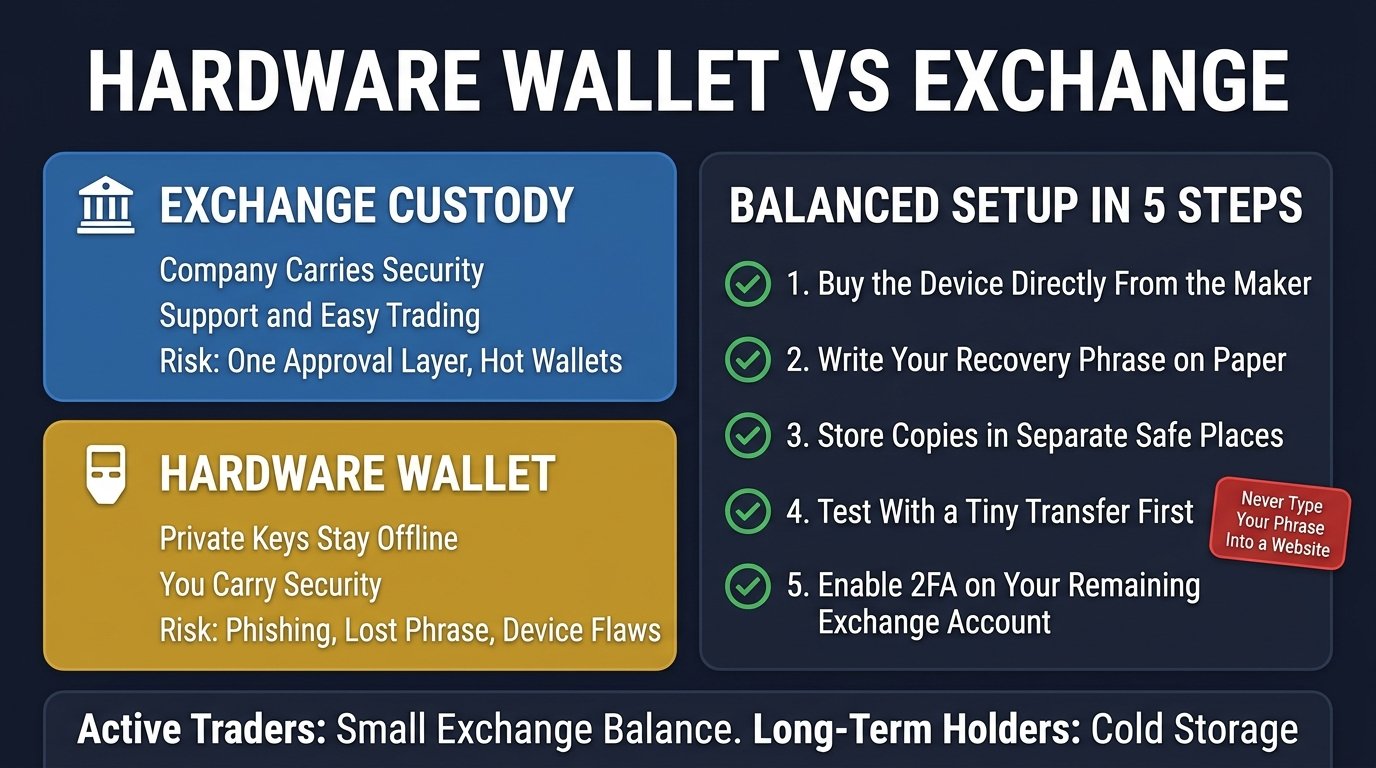
This stress test offers practical lessons. First, avoid putting all your coins on one platform, even a strong one. Second, move long-term holdings into a hardware wallet so that an exchange failure cannot touch them. Third, never chase a bounce without a plan, because bearish momentum can return fast. Fourth, follow official reserve updates and read them with care. Fifth, set clear exit levels before you buy, not after the price moves. These habits protect you whether the floor holds or breaks. Many readers also compare storage options before they commit. You can find step-by-step help in the security articles on Blockyr and build a safer routine for BNB and other assets.
How This Hack Compares With Past BNB Shocks
BNB has faced security scares before. In October 2022, attackers exploited a cross-chain bridge and created two million BNB. The price fell about 5% in four hours, from $295 to $280, and then recovered as the network resumed. The 2026 attack dwarfs that event in size, yet the token reaction stayed similarly measured. The 2022 FTX collapse produced far deeper fear, because users doubted whether the exchange could repay anyone. Binance’s 2026 response differed. It promised full coverage, opened its reserves to inspection, and restored service within days. Bitwise’s Matt Hougan also pointed out that large hot wallet hacks have rarely changed future crypto returns. History therefore supports the idea that a well-handled hack can pass without lasting price damage.
Frequently Asked Questions
1. Did BNB crash after the Binance hack?
No. BNB fell about 6.4% in a day and traded near $696, then recovered above $700. The drop hurt, but it stayed far smaller than the fall that followed the FTX collapse.
2. Which BNB support levels matter most now?
Analysts watch the $682 zone first, then $663 and $637. On the upside, they track $730, $760, and $796. These levels guide traders but do not guarantee outcomes.
3. Did Binance cover the stolen funds?
Binance says it covered about 90% of the stolen value from company funds and plans to acquire the rest. It also froze roughly $3 billion with partner help.
4. Is BNB safe to hold after the hack?
No asset is risk-free. BNB still faces weak momentum and unanswered questions about the attack. Hold only what you can afford to risk, and keep long-term coins in a hardware wallet.
Final Thoughts
The Binance hack tested BNB under the harshest conditions it has faced. The token bent, but it did not break. Quick coverage, visible reserves, and fast service recovery gave buyers a reason to defend the floor near $700. Still, strong support does not equal strong momentum, and the next few weeks will show whether trust truly returns. Smart holders will watch reserve reports, flow data, and the key price levels listed above. They will also protect their own coins with better storage habits. Visit Blockyr for more market and security guides, and share this blog with anyone who follows BNB.