

A few years ago I watched someone pull up their own wallet address from 2019 on a block explorer and read their entire financial history back to them like a diary entry, every coffee shop NFT mint, every exchange withdrawal, every embarrassingly bad trade. That’s the part about public blockchains nobody explains clearly enough up front. Bitcoin and Ethereum aren’t private by default, they’re permanently public, searchable, and timestamped. An incognito wallet exists specifically to close that gap, and understanding exactly how it does that, and where it doesn’t, is worth ten minutes before you actually use one.
What Is an Incognito Wallet, Exactly
An incognito wallet is a type of cryptocurrency wallet built to hide the details of your transactions, sender address, recipient address, asset type, and amount, from anyone looking at the public blockchain. That’s different from a regular wallet like MetaMask or a standard exchange wallet, where every transaction is permanently visible to anyone who knows your address.
The Official Incognito Wallet vs the Generic Term
Here’s where a lot of existing guides get sloppy, and it’s worth clearing up first. “Incognito wallet” refers to two different things depending on context. There’s Incognito, a specific product built by a company founded in 2018 by Duy Huynh, which runs its own privacy-focused sidechain. And there’s the generic use of the term, meaning any anonymous or privacy-oriented crypto wallet, including Monero wallets, CoinJoin-based Bitcoin wallets, and no-KYC exchange wallets. Both meanings are legitimate, but they work completely differently under the hood, and this guide covers both so you can figure out which one actually matches what you’re trying to do.
How the Incognito Wallet Actually Works
The official Incognito Wallet operates as a blockchain-agnostic sidechain, meaning it runs alongside existing blockchains like Bitcoin and Ethereum rather than replacing them. It’s a non-custodial hot wallet available on iOS, Android, and as a Chrome extension, which means you hold your own private keys the entire time, nobody at Incognito can freeze or access your funds.
Shielding, Turning Public Crypto Into Private Crypto
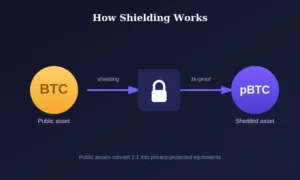
The core mechanic is called shielding. You send a standard public asset, say BTC or USDT, into the Incognito network, and the network mints an equivalent privacy-protected version, pBTC or pUSDT, inside your wallet at a 1:1 ratio. From that point forward, that asset can be sent, received, and swapped without leaving a trace on the original public blockchain’s explorer.
Zero-Knowledge Proofs Explained Simply
The privacy layer runs on zero-knowledge proofs, specifically a variant called Bulletproofs. Here’s the plain-English version, a zero-knowledge proof lets the network confirm a transaction is valid, meaning you actually have the funds and aren’t double-spending, without revealing who sent what to whom or how much. It’s the difference between a bouncer checking your ID and a bouncer just confirming, without seeing your ID, that yes, you’re over 21. The network gets the confirmation it needs, without getting the underlying data.
Unshielding, Going Back to the Public Chain
When you want to move funds back to a normal, public wallet or exchange, you unshield them, converting pBTC back into regular BTC that lands in a public address of your choosing. This step is worth understanding before you shield anything, because unshielding to an exchange that already has your KYC information can undo a meaningful chunk of the privacy benefit you just built, more on that later.
What You Can Do Inside an Incognito Wallet
Beyond basic sending and receiving, the wallet supports over one hundred cryptocurrencies and includes a built-in decentralized exchange for swapping between shielded assets without ever touching a centralized platform. You can also stake PRV, the network’s native token, or provide liquidity to its pools and earn a share of trading fees. There’s even an optional hardware device, the Incognito Node, that lets you run a validator node from home and earn PRV passively, though real-world returns from running one have been reported as fairly minimal relative to the hardware cost.
Incognito Wallet Setup, a Step-by-Step Walkthrough
Download the app from the iOS App Store, Google Play, or install the Chrome extension from Incognito’s official site, never from a third-party link. Create a new wallet and write down your recovery seed phrase on paper, not in a screenshot or a notes app, then store it somewhere offline. Fund your wallet by shielding an asset, choose the coin you want to shield, follow the on-screen deposit address, and send your BTC, ETH, or supported token from your existing wallet or exchange. Wait for network confirmations, shielding isn’t instant, it typically takes several block confirmations on the original chain before your shielded balance appears. Once shielded, you can send, swap, or hold the asset privately, and unshield it back to a public address whenever you’re ready to cash out or move funds elsewhere.
Is an Incognito Wallet Actually Legal
Yes, in most jurisdictions, simply owning and using a privacy-focused wallet is not illegal. Financial privacy tools exist for plenty of legitimate reasons, protecting yourself from public exposure of your net worth, avoiding targeted scams that follow wallets with visible large balances, or just not wanting strangers to see your spending habits. What can create legal exposure isn’t the wallet itself, it’s what you do with it, evading taxes, laundering funds, or violating your local exchange’s terms of service.
The Travel Rule and Why It Matters
The bigger friction point in 2026 comes from regulation aimed at exchanges rather than wallets directly. The Financial Action Task Force’s Travel Rule requires virtual asset service providers, meaning centralized exchanges, to collect and share sender and recipient information above certain transaction thresholds. The EU’s fifth Anti-Money Laundering Directive and its newer MiCA framework push in the same direction. None of this makes a privacy wallet illegal to hold, but it does mean the moment shielded or private funds touch a regulated exchange, that exchange still has to comply with its own reporting obligations, which can partially unwind the privacy you built upstream.
Why Exchanges Are Delisting Privacy Coins
Several major exchanges have delisted privacy coins entirely in certain jurisdictions rather than build the compliance infrastructure to support them under evolving rules. This is a genuinely practical problem for anyone relying on an incognito wallet as part of a broader trading strategy, since it directly limits liquidity and the number of on-ramps and off-ramps available to you.
The Real Risks of Using an Incognito Wallet
This is the section most promotional content skips entirely, and it’s the part that actually matters if you’re deciding whether to use one.
Liquidity and Exchange Support
PRV, Incognito’s native token, doesn’t appear on major price-tracking platforms like CoinMarketCap or CoinGecko, which limits its visibility and makes it harder to gauge fair market pricing. Shielded assets in general tend to have thinner liquidity than their public counterparts, which can mean worse pricing on swaps, especially for larger amounts.
Centralization Risk in the Incognito Network Itself
Here’s an irony worth sitting with. A privacy tool built to reduce your reliance on any single trusted party still depends on the continued health of the Incognito network itself. If validator participation drops or development slows, the privacy guarantees the whole system is built on could weaken over time. You’re trading one form of trust, in a bank or exchange, for a different form of trust, in a smaller network’s long-term viability.
The Compliance Trap Most People Miss
This is genuinely the biggest gap in most guides on this topic. Privacy at the wallet level doesn’t erase your tax obligations, and it doesn’t erase the KYC trail that already exists the moment you buy crypto with a bank card or bank transfer. If you bought your original BTC on a KYC-compliant exchange, that exchange already knows it was you, shielding it afterward doesn’t retroactively remove that link, it only obscures what happens to the funds from that point forward. True anonymity in crypto, as more than one industry analyst has put it, isn’t a single wallet setting, it’s a full system you’d have to build deliberately and consistently, and most casual users aren’t actually doing that.
Incognito Wallet vs Other Privacy-Focused Options
If you’re comparing the official Incognito Wallet against other privacy approaches in the market, here’s how they actually differ.
| Wallet | Privacy method | Custody | Best for |
| Incognito Wallet | Zero-knowledge proofs via shielding | Non-custodial | Users who want to shield existing BTC, ETH, and ERC-20 assets |
| Monero (native wallet) | Ring signatures and stealth addresses, built into the protocol | Non-custodial | Users who want privacy by default with no shielding step |
| Wasabi Wallet | CoinJoin transaction mixing for Bitcoin | Non-custodial | Bitcoin-only users who want to break address linkability |
| No-KYC exchange wallets | No identity verification at signup | Varies | Users who want to avoid ID checks, not full transaction privacy |
Who Actually Needs an Incognito Wallet
Realistically, this tool makes the most sense for a fairly specific set of people. Someone holding a visible, sizeable crypto balance who wants to avoid becoming an obvious target for scams or physical theft has a legitimate reason. Traders who don’t want competitors or the broader market front-running their positions by watching a known wallet address benefit too, which is part of why reports have surfaced of high-profile traders using incognito-style setups to manage large positions quietly, a trend worth watching alongside the broader Bitcoin and Ripple market coverage on Blockyr. On the other hand, if your goal is simply avoiding an exchange’s identity verification step, a privacy wallet solves the wrong problem, that’s a no-KYC exchange question, not a wallet privacy question, and the two get conflated constantly in search results for this exact keyword.
How to Use an Incognito Wallet Safely and Responsibly
Keep your recovery phrase completely offline and never enter it into any website, no legitimate wallet will ever ask for it through a support chat or email. Understand your local tax obligations before shielding funds, privacy from public view is not privacy from your own government’s reporting requirements, and most jurisdictions still expect you to report crypto gains regardless of which wallet you used. Double-check every address before sending, shielded and unshielded transactions generally cannot be reversed once confirmed. And treat any wallet with a smaller ecosystem, including Incognito’s, with the understanding that liquidity and long-term support aren’t guaranteed the way they are with larger, more established platforms.
None of this is financial or legal advice, and privacy tools sit in a genuinely evolving regulatory space. If you’re using one for anything beyond casual personal privacy, it’s worth a conversation with a professional familiar with crypto tax and compliance rules in your specific country.
Frequently Asked Questions
What is an incognito wallet?
An incognito wallet is a cryptocurrency wallet designed to hide transaction details like sender, recipient, and amount from public blockchain explorers, typically using zero-knowledge proofs or similar cryptographic methods to shield that information while still validating transactions.
Is the Incognito wallet safe to use?
The Incognito Wallet is non-custodial, meaning you control your own private keys, which removes the risk of a centralized custodian losing your funds. However, it carries other risks, including limited liquidity for shielded assets and dependence on the ongoing health of the Incognito network itself.
Can incognito wallet transactions be traced?
Shielded transactions within the Incognito network itself are protected by zero-knowledge proofs and are not visible on public block explorers. However, the initial deposit into the wallet and any withdrawal back to a KYC-linked exchange can still create identifiable links at those specific points.
Is using a privacy wallet illegal?
No, using a privacy-focused wallet is legal in most jurisdictions. What can create legal issues is using such a wallet to evade taxes, launder funds, or violate specific exchange terms of service, not the act of using privacy technology itself.
What cryptocurrencies work with Incognito wallet?
The Incognito Wallet supports over 100 cryptocurrencies, including Bitcoin, Ethereum, and various ERC-20 tokens, which can be shielded into privacy-protected equivalents at a 1:1 ratio through the wallet’s shielding process.
How much does the Incognito wallet cost to use?
The Incognito Wallet app itself is free to download and use. Costs come from standard network fees for shielding and unshielding transactions, plus any trading fees incurred through its built-in decentralized exchange.