


This USDC trading guide explains why so many traders move funds into stablecoins when markets become unpredictable. USD Coin is a stablecoin designed to maintain a value of one US dollar, backed by reserves and issued by Circle. When prices swing wildly, holding a stable asset can protect your capital while you wait for clearer conditions. It also gives you instant liquidity to buy when opportunities appear. In this article on blockyr.com, we cover how USDC works, practical trading uses, safety checks, and risks. This content is educational and is not financial advice, so always do your own research before making decisions.
What Is USDC and How Does It Work?
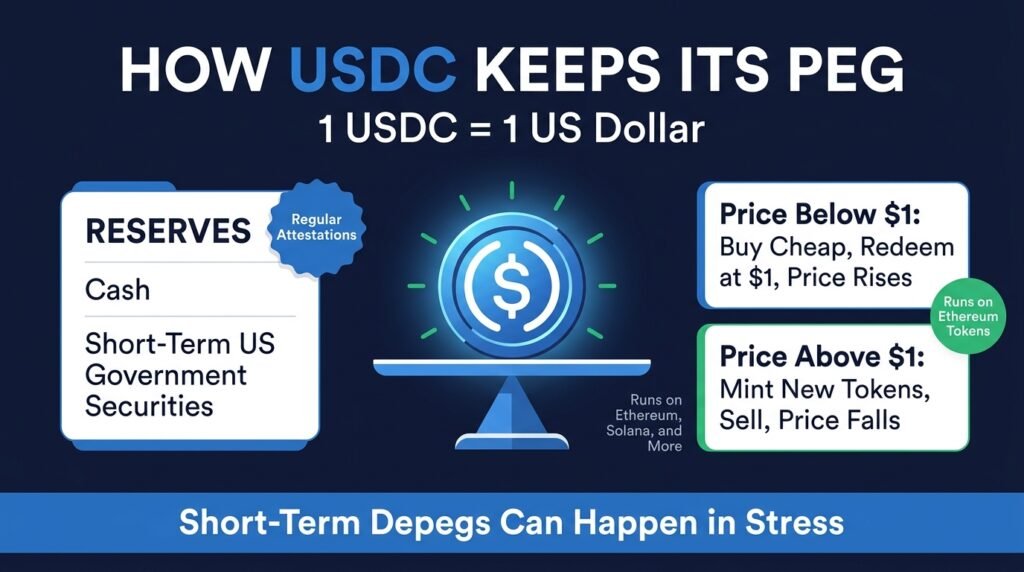
A good USDC trading guide starts with the basics. USDC is a fiat-backed stablecoin, meaning each token is intended to be redeemable for one US dollar. Circle states that reserves are held in cash and short-term US government securities, and it publishes attestations so users can review them. USDC operates on multiple blockchains, including Ethereum, Solana, and others, allowing fast transfers across platforms. Traders value it for transparency, wide exchange support, rt and strong integration with decentralized finance. Because its price aims to stay near one dollar, it serves as a convenient parking spot between trades.
The Reserve and Redemption Model
For each USDC issued, the issuer aims to hold equivalent dollar-denominated reserves. Eligible users can redeem tokens for dollars through the issuer, which helps keep the market price close to its peg. Regular attestations by independent accountants provide additional visibility into reserve composition. This structure differs from algorithmic stablecoins, which rely on code and incentives rather than direct backing and have collapsed in the past. Understanding reserve quality is a key part of any USDC trading guide, since the safety of a stablecoin depends on the assets supporting it and the reliability of its issuer.
Why USDC Maintains Its Peg
The peg is supported by arbitrage and redemption. If USDC trades below one dollar, traders can buy it cheaply and redeem it at full value, pushing the price upward. If it trades above, new tokens can be minted and sold, pushing it back down. This mechanism works best when confidence in reserves remains strong. During extreme stress, temporary deviations can occur, as seen in past banking disruptions. Knowing this helps traders avoid panic and recognize that short-term price differences may reflect liquidity issues rather than permanent failure. This is a valuable insight to keep in mind when following any USDC trading guide.
Why Traders Park Funds in USDC During Volatility
When crypto prices drop quickly, many traders convert volatile holdings into USDC. This action locks in a dollar value without leaving the crypto ecosystem, so funds can be redeployed immediately. Withdrawing to a bank can take time and may trigger fees or tax events, while stablecoins move within minutes. Parking funds in USDC also removes emotional pressure, giving you space to think clearly. Many professional traders hold part of their portfolio in stablecoins as a standard risk-control practice. This USDC trading guide highlights it as a flexible tool, not a guarantee against losses.
Capital Preservation in Falling Markets
During sharp downturns, assets can lose value faster than most people expect. Moving part of your position into USDC protects the remaining capital from additional declines. This does not predict the bottom; it simply reduces exposure when uncertainty is high. Some traders sell in stages, scaling out as risk rises, rather than making one dramatic decision. Holding stablecoins also keeps you ready for rebounds, because you can act quickly. Preserving capital is a central principle in any USDC trading guide, since avoiding large losses makes recovery much easier than trying to recoup a deep drawdown.
Staying Liquid for New Opportunities
Volatility creates opportunities as well as risks, and cash on hand allows you to take advantage of them. If prices drop to levels you consider attractive, USDC lets you buy without waiting for deposits or transfers. This speed can matter in fast markets where prices change within minutes. Traders often prepare a watchlist and decide in advance at which levels they would buy. Having funds ready in USDC makes it easier to follow that plan calmly. This approach, central to many USDC trading guide strategies, supports disciplined execution instead of impulsive reactions driven by fear or excitement.
Practical Ways to Use USDC in Trading
USDC is useful beyond simply sitting in a wallet. Many exchanges list trading pairs quoted in USDC, allowing you to measure profits and losses in dollar terms. It also supports transfers between platforms with low fees on efficient networks. Some traders use it in DeFi to earn yield, although this introduces additional risks. A thorough USDC trading guide should emphasize that convenience must be balanced with safety, and that each additional use case, from lending to liquidity provision, adds potential points of failure that require careful evaluation.
Trading Pairs and Entry Planning
Trading against USDC makes pricing straightforward, since gains and losses are measured in a stable unit. It also allows you to exit a volatile position without changing platforms. Plan entries by setting target prices, stop-loss levels, els and position sizes before placing orders. Using limit orders can help you buy at predetermined levels, avoiding emotional decisions. Many traders split their capital into several portions, entering gradually to reduce timing risk. This structured approach turns a USDC trading guide into a repeatable process, helping you remain consistent through different market conditions.
Earning Yield and Understanding the Trade-Offs
Some platforms offer interest for lending or depositing USDC. While this can generate returns during quiet periods, it brings counterparty and smart contract risks. A platform may fail, restrict withdrawals,wals or suffer an exploit, so high yields should be treated with suspicion. Check audits, track record, transparency, currency, and whether the service is regulated. Never put all your funds in a single protocol, and avoid products promising guaranteed returns. You can read more about stablecoin basics through resources such as Circle’s official USDC page. Caution is essential in every USDC trading guide.
Risks and Safety Checks for USDC Traders
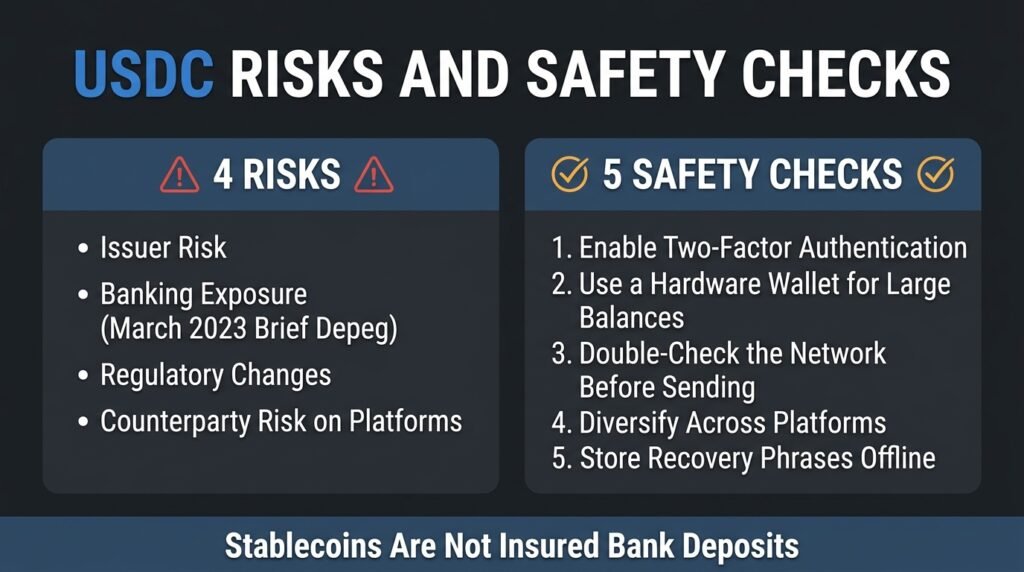
Although stablecoins are designed to be steady, they are not risk-free. Issuer risk, banking system exposure, regulatory changes,hanges and technical failures can all affect USDC. In March 2023, USDC briefly lost its peg after the issuer disclosed exposure to a failed bank, before recovering. This event showed that even leading stablecoins can face stress. A responsible USDC trading guide encourages diversification across assets and platforms, plus regular monitoring of news. Understanding these risks helps you use stablecoins wisely without assuming they are equivalent to insured bank deposits.
Depeg, Regulatory and Counterparty Risks
A depeg occurs when a stablecoin trades meaningfully away from one dollar. It can result from reserve concerns, liquidity shortages,ortages or market panic. Regulation may also change how stablecoins are issued, held, and used, affecting availability in certain regions. Counterparty risk arises when you keep funds on an exchange or lending platform that could become insolvent. Reduce exposure by withdrawing to a secure wallet when appropriate and by avoiding excessive concentration. Staying informed through reliable news sources and official issuer updates is a practical habit every trader should adopt.
Security Best Practices
Use strong, unique passwords and enable two-factor authentication on every exchange account. Consider a hardware wallet for larger balances, and always double-check wallet addresses and network selection before sending funds, because sending USDC on the wrong network can cause permanent loss. Beware of phishing links, fake support agents, and unsolicited investment offers. Keep software updated and store recovery phrases offline. Security discipline protects your funds regardless of market direction, making it as important as any trading tactic. Every USDC trading guide should stress that safeguarding assets is the foundation of long-term success.
FAQs
1. Why do traders use USDC during volatility?
USDC offers a stable dollar value while keeping funds on-chain, so traders can protect capital and re-enter the market quickly.
2. Is USDC safe?
It is considered one of the more transparent stablecoins, but it is not risk-free. Issuer, banking, and regulatory risks exist, so diversify and stay informed.
3. Can USDC lose its peg?
Yes, temporary depegs have happened during market stress. Prices typically recover when confidence returns, but the risk is real.
4. Is USDC better than keeping cash in a bank?
They serve different purposes. USDC is faster for crypto trading, but bank deposits may carry insurance protections that stablecoins do not.
Conclusion
This USDC trading guide shows why traders park funds in USDC during volatility: it preserves capital, keeps funds liquid,d and supports calm, planned decision-making. At the same time, USDC carries issuer, depeg, regulatory, and security risks, so diversification and careful platform selection matter. Build a clear plan, use secure practices,s and stay informed. For more crypto guides, explore blockyr.com. This article is educational and does not constitute financial advice.